Key topics
As the main business line of TTC AgriS is the production of Sugar products and Sugar by-products, TTC AgriS has a high demand for sugarcane and raw sugar. Therefore, it requires TTC AgriS to have effective governance and management of input materials to ensure product productivity and quality, minimize disruptions in production, and control costs.
Management approach
TTC AgriS developed the DigiFactory software to manage the input materials. It provides an effective online communication channel, which allows users to access data from anywhere and facilitates the management and supervision of the production process. This also regularly updates information and progress on raw materials for the Company’s leadership via:
- Daily reports on DigiFactory;
- Weekly production meetings at the factory;
- Monthly planning meetings at the corporate level to optimize input material inventory, enhance production capacity, and ensure timely delivery of input materials.
GRI 301-1: MATERIALS USED BY WEIGHT OR VOLUME
In the sugarcane industry, the most important raw materials, also the two primary materials for producing Sugar products, are sugarcane and raw sugar. Therefore, TTC AgriS, as one of Vietnam’s leading agricultural companies in terms of sugar manufacturing and trading, not only improves its capacity for crushing sugarcane and producing sugar from sugarcane and raw sugar, but also builds sugar refineries to enable offseason refining process and optimize the factory’s operational capacity.
1. Raw sugarcane
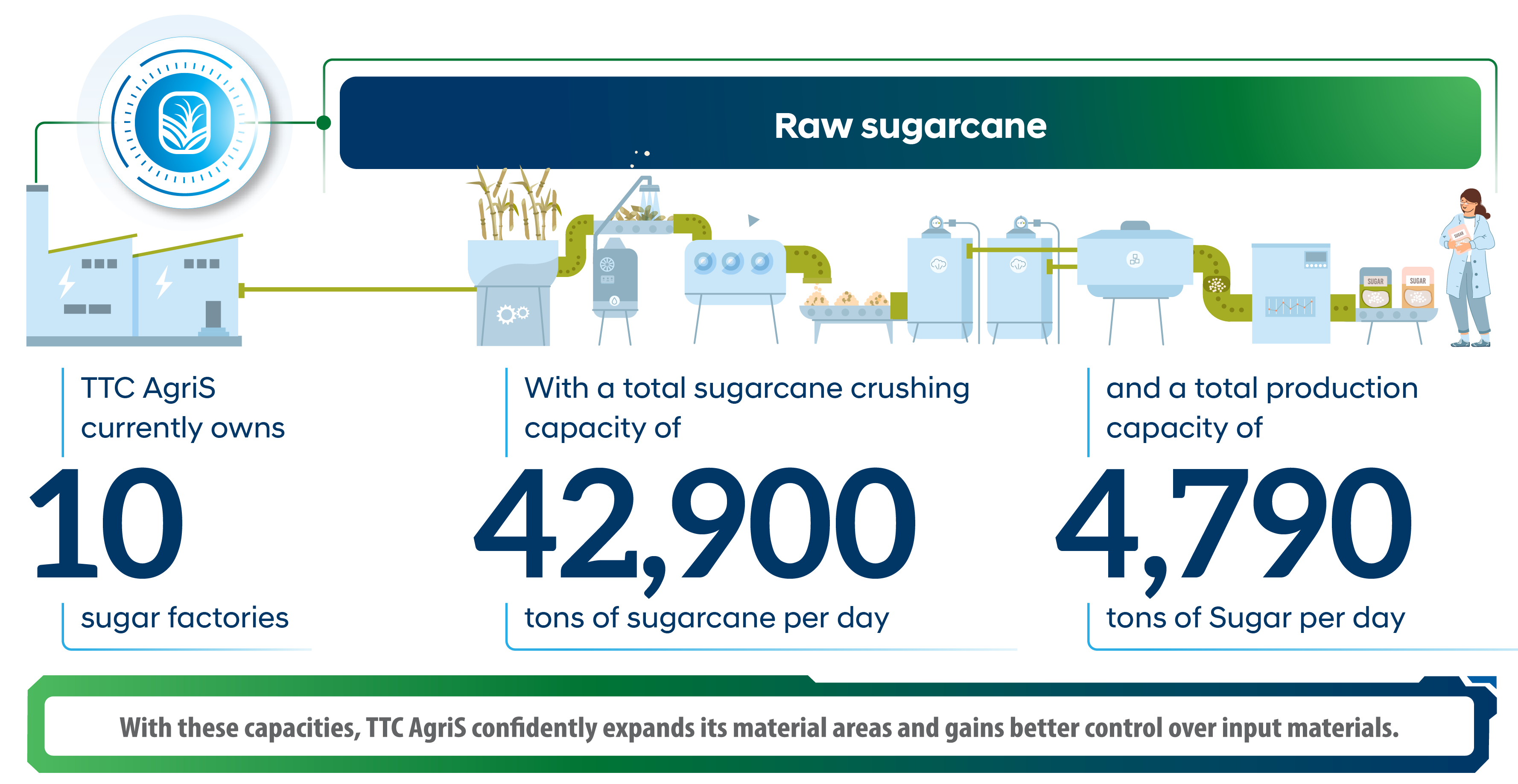
In the next FY, TTC AgriS’s sustainable development strategy for material areas will continue to focus on improving the Company’s control over the usage of material areas. This is achieved by gradually reducing the Company’s reliance on contracted areas and increasing the proportion of owned areas, enhancing operational efficiency, and using the land effectively
2. Raw sugar
In FY 2023-2024, TTC AgriS reaffirmed its position as a leader in sustainable practices, solidifying its dominance in the national agriculture sector with a 46% domestic market share. For the fifth consecutive year, sugar consumption exceeded 1 million tons, while the Company achieved record-breaking financial performance, far surpassing annual targets for both revenue and profit. In particular, net revenue reached an alltime high of VND 29,021 billion, a 17% increase compared to the previous year and 41% above the annual target. Pretax profit (PTP) amounted to VND 908 billion, reflecting a 26% year-over-year growth and exceeding the plan by 7%. Meanwhile, post-tax profit (PTP) surged to VND 806 billion, an impressive 33% increase over the prior year. In the domestic market, the consumer channel (B2C) and the trade channel recorded strong growth, rising by 22% and 18%, respectively, compared to the previous fiscal year. The industrial channel (B2B) maintained its solid performance, holding a stable share of the overall consumption structure.
In the face of market volatility and the potential for scarcity in sugar supply, the Company has flexibly processed off-season raw sugar to meet the demands of domestic and international consumers. Currently, four out of ten sugar refineries of the Company are capable of processing raw sugar. Three of these refineries, namely Bien Hoa - Ninh Hoa, Bien Hoa - Dong Nai, and TTCS, are the major raw sugar refining centers. Among these three centers, Bien Hoa - Dong Nai stands out as the only refinery that can operate year-round, with a capacity of 400 tons of sugar per day, allowing the Company to have greater control over its input materials, a longer refining period, and higher machinery productivity. Not only enhancing production capacity, TTC AgriS also fosters relationships with farmers, as a significant share of the Company’s raw sugar sourced from sugarcane grown by farmers, and upholds the long-term social responsibility towards the community living near the Company’s material areas.
GRI 301-2: RECYCLED INPUT MATERIALS USED
Sugarcane is a versatile plant, from its stem to its top. Besides its main product which is Sugar, the value of sugarcane is enhanced by the recycling of the by-products of sugar production. For example:
- Molasses is used to produce animal feed, ethanol, etc.
- Bagasse is used as fuel for sugar refining; bagasse burned also generates electricity to power the factory’s operations.
- Sugarcane leaves, ash and press mud from the production process, can be used as microbial fertilizers for sugarcane cultivation.
TTC AgriS thoroughly leverages this circular economy by investing in projects that aim to increase the share of Sugar by-products, diversify the product portfolio made from sugarcane, and maximize profits, as revenue from Sugar by-products can be 3-4 times higher than that of Sugar, and protect the environment.
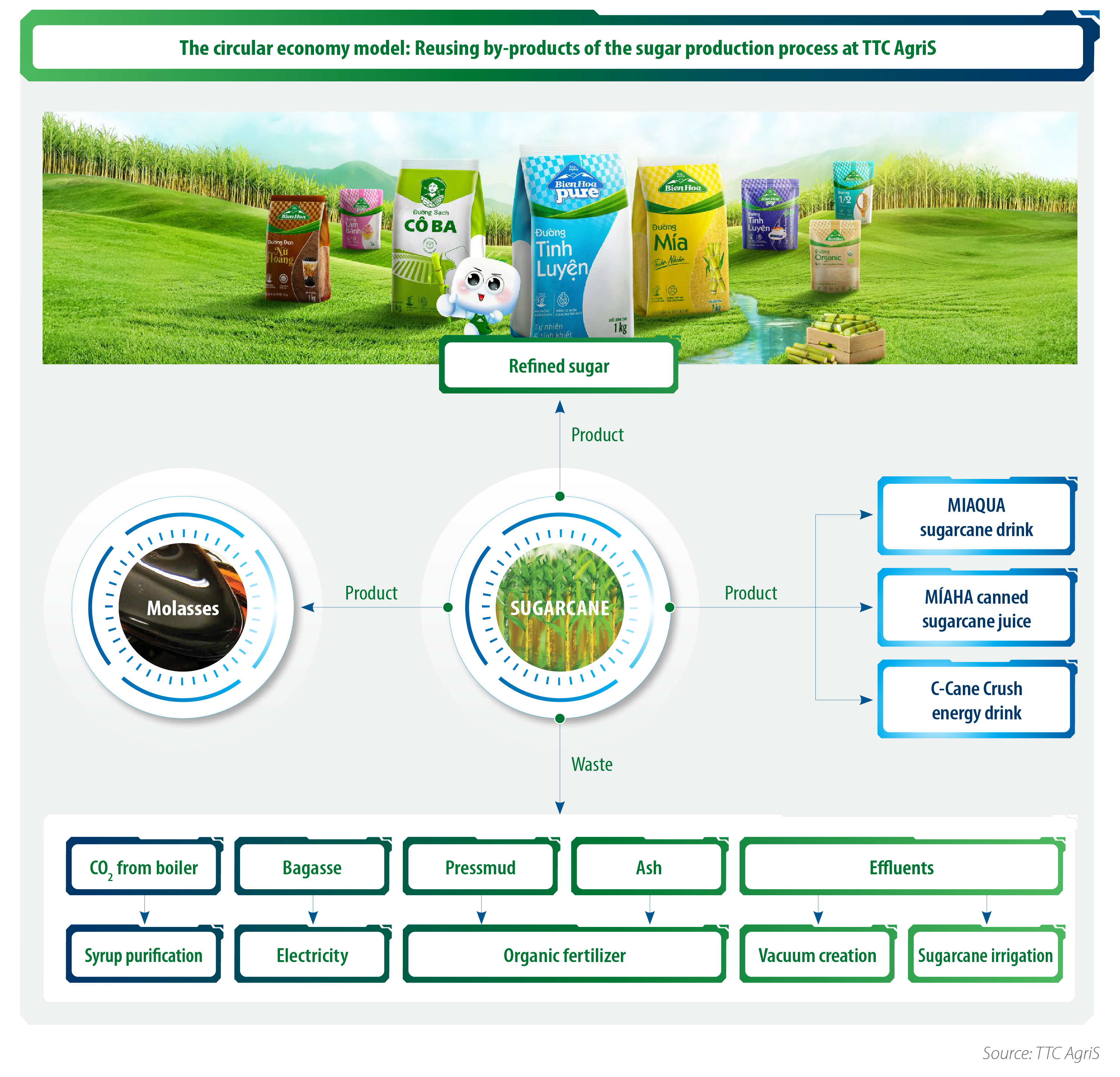
Products manufactured from TTC AgriS’s by-products by FY 2023-2024
1. Sugarcane-based beverages
- Miaqua, a specially manufactured good, is a sugarcane drink extracted from the condensation and distillation process of sugarcane. It, therefore, still has the pleasant sweetness of sugarcane.
- In FY 2023-2024, the Company obtained nearly 3.6 million liters of Miaqua sugarcane drink from the sugarcane evaporation process during sugar refining, remaining consistent with last year.
2. Bagasse
- Bagasse is a by-product of sugar production that remains after the extraction of juice from sugarcane. Bagasse can be used as a fuel source for boilers and in the manufacture of mushrooms, paper, organic fertilizer, animal feeds, etc.
- In FY 2023-2024, the Company recovered and reused nearly 1 million tons of Bagasse, significantly reducing waste released into the environment.
3. Commercial electricity
- To maximize the value chain of sugarcane, the majority of bagasse is collected and sent to boilers. Here, the bagasse is burned to provide heat for sugar production and generate electricity that is either used to fuel the factory’s operations or sold to the grid.
- In FY 2023-2024, the Company’s total commercial electricity output reached approximately 144 million Mwh, up 3% YoY.
4. Molasses
- Molasses is a by-product of the sugar production. The production process generates sugar crystals and mother liquor. The sugar crystals are then separated from the liquor, and the liquor is boiled again for further crystallization. In the conventional methods, after approximately 3 rounds of crystallization, it’s nearly impossible to harvest any more sugar crystals. The remaining liquor is called molasses.
- In FY 2023-2024, the Molasses-to-Sugarcane ratio maintained a good level, roughly similar to the previous FY, contributing to an improved sugar recovery efficiency.
5. Liquid caramel
- Pure caramel: Crafted from natural sugarcane syrup and processed to meet stringent food safety standards, this product is entirely free from preservatives. It serves as an excellent alternative to chemical coloring agents, providing natural flavor enhancement while adding the nutritional benefits of sugarcane syrup.
- Bep Xua caramel is produced using molasses extracted from the sugar crystallization. This product helps enhance the sugarcane value chain and caters to the new demands of consumers.
- XIM coconut caramel – Mom Cooks A rich, flavorful blend concentrated from fresh coconut water and naturally aromatic sugarcane syrup, delivering a wholesome and authentic taste.
- In FY 2023-2024, the Company successfully produced a total of 145 cans and 306,920 bottles of caramel in various pack sizes, effectively meeting market demand with a diverse product range.
6. Organic fertilizer
- Microbial organic fertilizer is produced from the by-products of sugar production which are ash, sludge dregs, and raw sludge. TTC AgriS applies microbial technology and Trichoderma to transform the organic components in the sugarcane sludge into compost. The product is then fortified with trace elements (Boron, Magnesium, Zinc, etc.) to enhance its quality.
- In FY 2023-2024, the Company sold nearly 47,690 tons of fertilizer with quality exceeding expectations.
Key topics
It is imperative for numerous businesses to focus on the effective control of energy consumption due to the nexus between renewable energy consumption, economic growth, the alarming depletion of natural resources, and the phenomenon of climate change. At TTC AgriS, the option of fuel materials that are smart, efficient, and safe is consistently upheld to reduce greenhouse gas emissions and minimize environmental impacts.
Management approach
TTC AgriS began implementing energy management through the integrated Oracle Cloud ERP software system in FY 2019- 2020. This is used to manage the output and cost of the energy produced, consumed, and grid-sold by the Company. With ERP, the Company’s leadership has regular access to periodic energy usage reports (daily, weekly, monthly, seasonal, etc.) and direct meetings (weekly, monthly, quarterly, etc.). ERP also allows the Engineering & Technology Department to routinely check and evaluate the performance data of the previous FYs and propose improvement methods based on crop season characteristics and the actual production needs of the FY.
GRI 302-1: ENERGY CONSUMPTION WITHIN THE ORGANIZATION
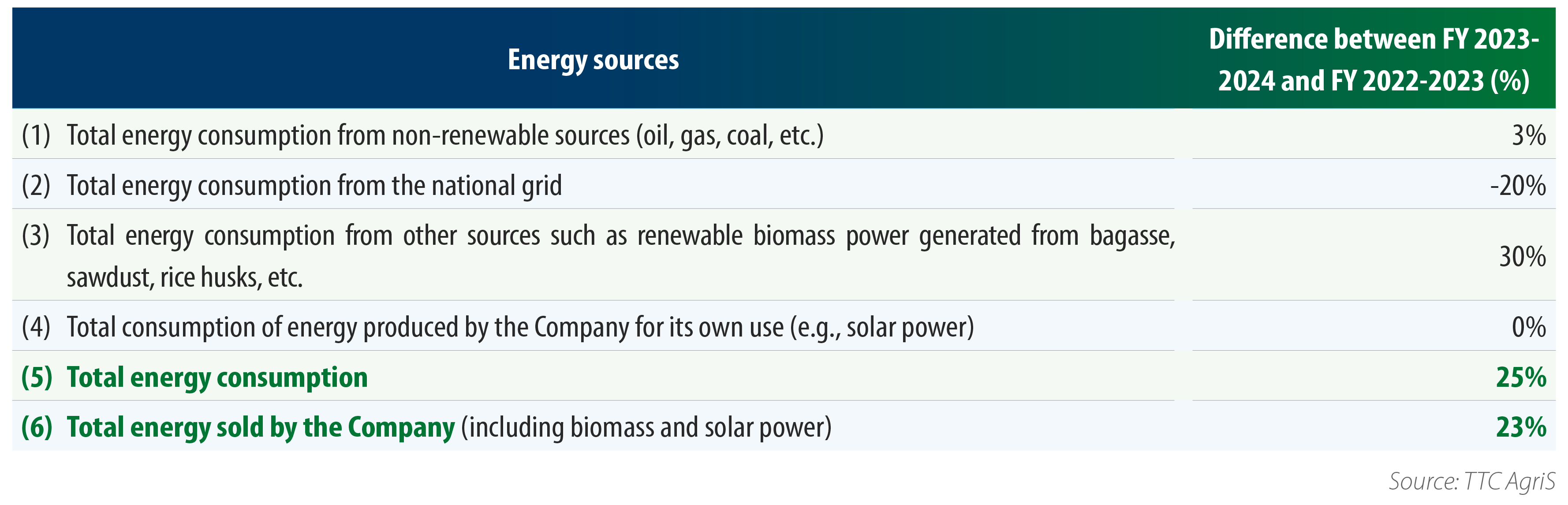
As the Company’s market share is continuously expanding, it requires the Company to employ various sources of energy for the production and business operations to meet the diverse market demands. In FY 2023-2024, TTC AgriS saw a rise in production demand, resulting in a 25% increase in total energy consumption compared to the previous fiscal year. However, the Company managed to achieve impressive results, thanks to its priority of utilizing natural and renewable energy sources to minimize environmental impact. Specifically, electricity consumption from the national grid decreased by 20%, while total energy consumption from clean energy sources generated by TTC AgriS, such as biomass electricity (from renewable sources like bagasse, sawdust, husk) and solar energy, increased significantly by 30% compared to last year.
Notably, the total energy TTC AgriS sold to the grid increased by 23% YoY. These results reflect the Company’s commitment to energy conservation and proactive generation of clean energy, as well as the Company’s efforts to grow the business on the basis of efficient energy use and environmental protection.
GRI 302-4: REDUCTION OF ENERGY CONSUMPTION
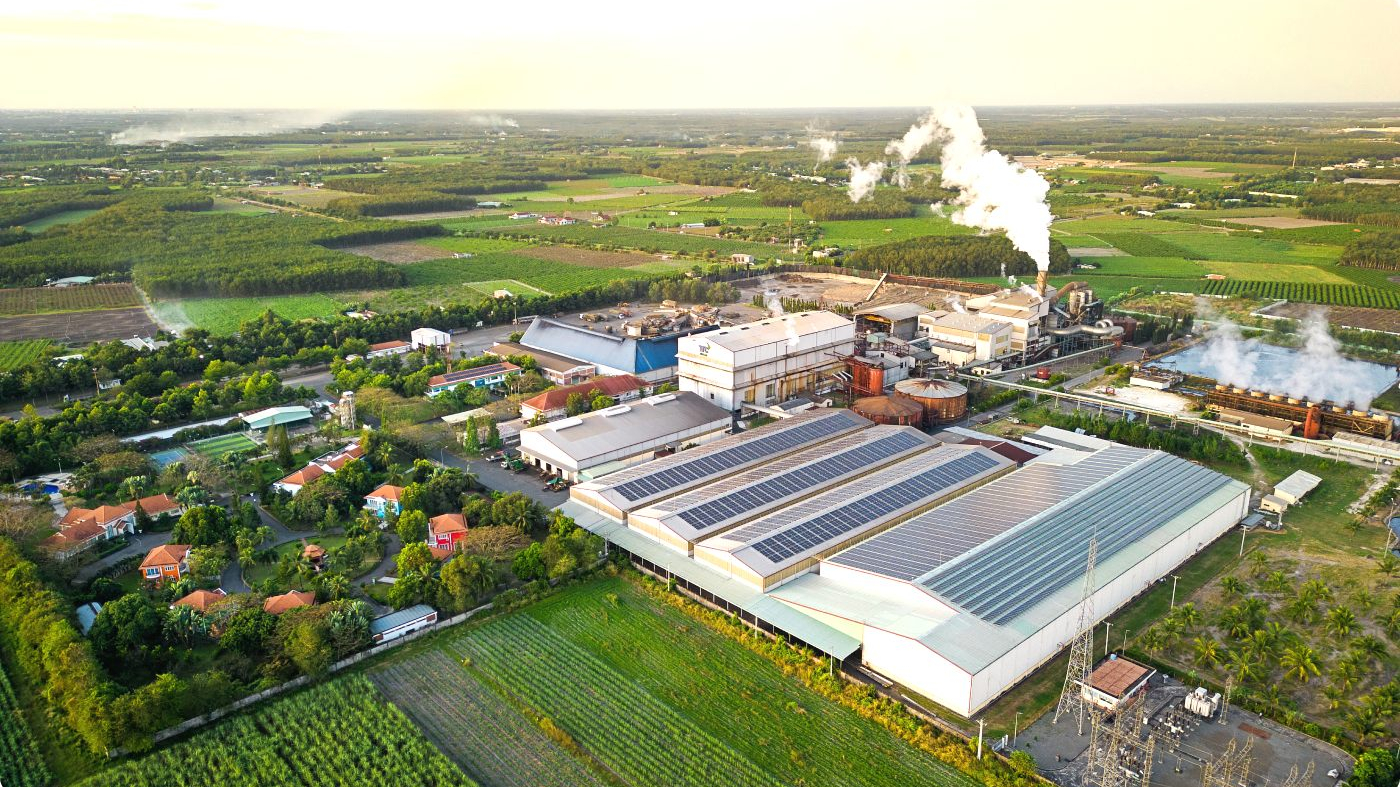
During FY 2023-2024, TTC AgriS invested in the installation of fixed solar panels on the rooftops of its factories and offices. The Company established 25 solar power stations with a total installed capacity of approximately 21.46 MWp, achieving a 2% increase in total solar energy output compared to the previous year.
At the same time, the Company maximized the use of clean energy to reduce operational costs. As a result, total energy sales during the fiscal year rose by 23% YoY, adding over 29.5 million kWh of electricity and generating nearly VND 55.1 billion in revenue.
In FY 2023-2024, TTC AgriS successfully registered for I-REC certification (International Renewable Energy Certificate) for its solar power projects. This was also the first year the Company secured I-REC certification for four biomass-fueled power plants utilizing bagasse as the primary fuel. The Company can issue an annual maximum of over 200,000 I-RECs, covering the following facilities:
- TTCS Factory (Tay Ninh, Vietnam)
- AgriS Ninh Hoa Factory (Ninh Hoa, Vietnam)
- AgriS Gia Lai Factory (Gia Lai, Vietnam)
- TTC - Attapeu Factory (Laos)
I-REC certificates generated from both solar and biomass energy have already been issued and are being used as part of TTC AgriS’s greenhouse gas (CO2e) offsetting plan. This effort plays a crucial role in advancing the Company’s commitment to mitigating global climate change.
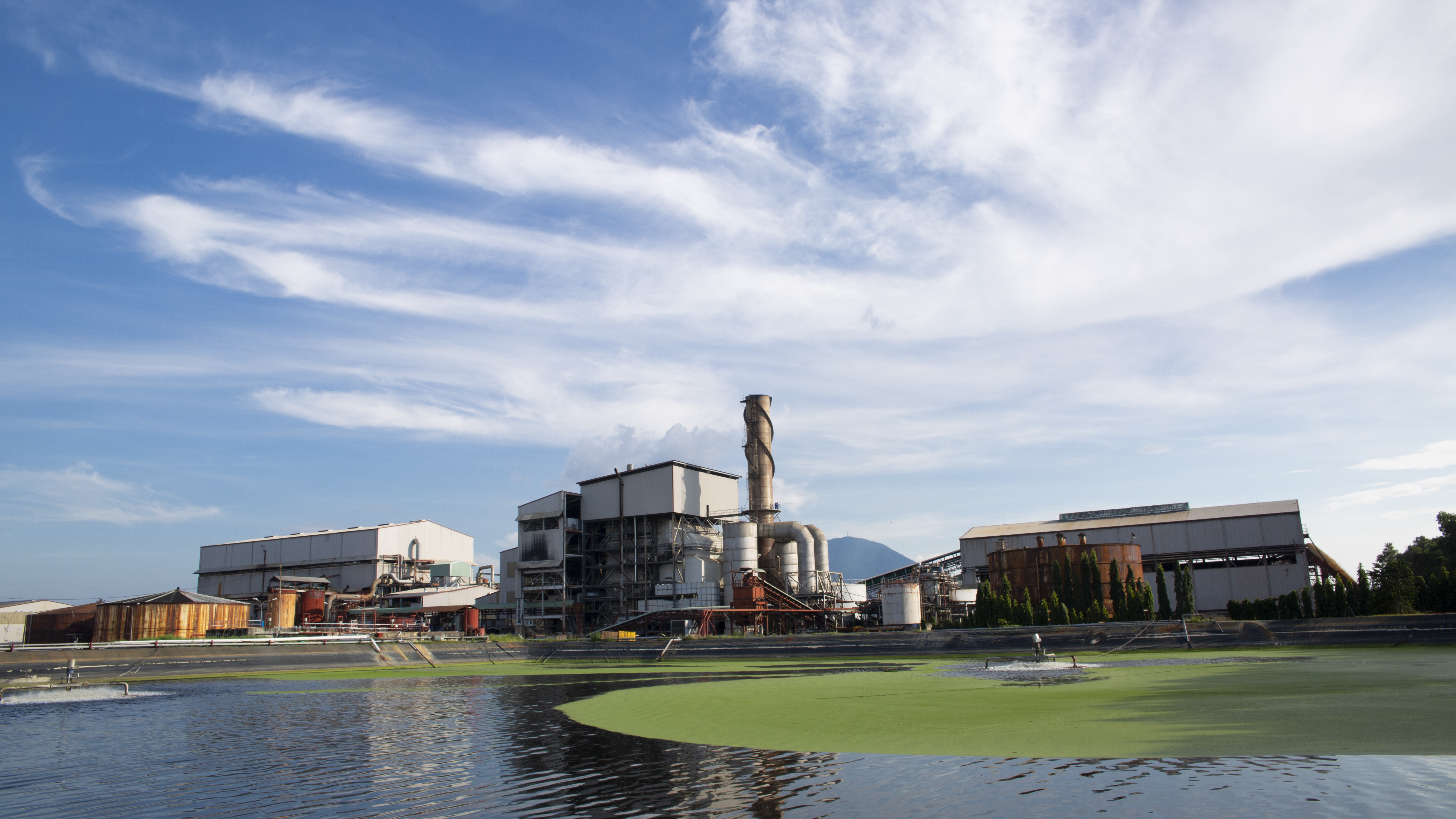
The factories where TTC AgriS successfully obtained I-REC certification
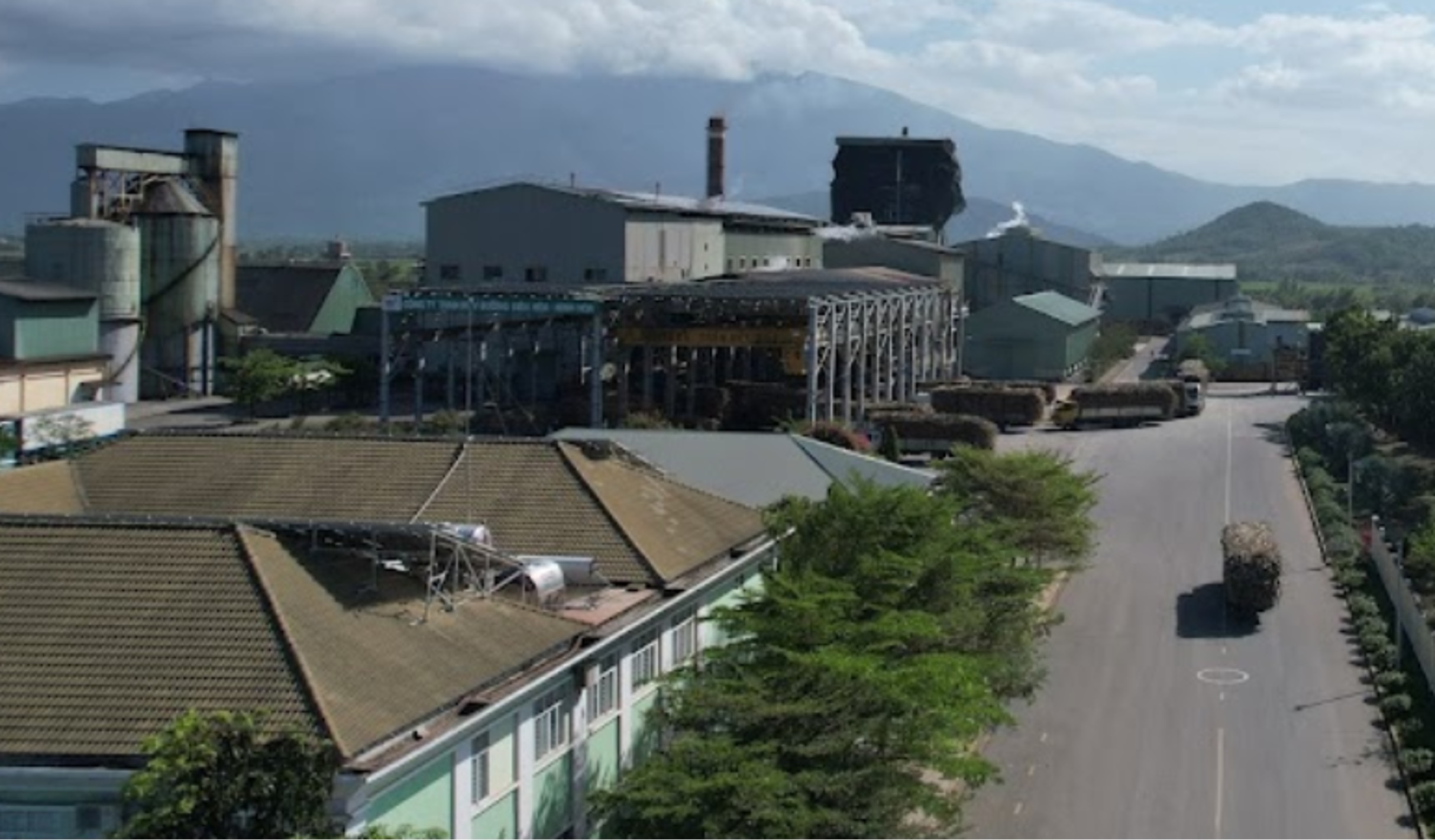
AgriS Ninh Hoa Factory

TTCS Factory
In addition to I-REC certificates generated from both solar and biomass-fueled power plants, the Company rolled out projects for drying bagasse, saving steam, and improving the carbonization system to reduce energy consumption. At TTC AgriS’s factories, with all high-pressure steam being replaced by the jet condenser, the steam consumption during the sugarcane crush stage steadily decreased over the years, from 0.67 tons of steam/ton of sugarcane in FY 2020-2021 to 0.55 in FY 2021-2022 and to 0.51 in both FY 2022-2023 and 2023-2024.
In the future, the Company plans to continue its research and innovation to install more equipment in the production line to optimize steam use, reduce energy consumption, cut greenhouse gas emissions, and cut production costs. In FY 2023-2024, despite having to increase energy demand to support the sales volume of over 1 million tons of sugar the Company successfully reduced the 4% energy required to produce a ton of sugarcane, from 37.98 Kwh/ton of sugarcane to 37.19 Kwh/ton of sugarcane, upholding its energy efficiency commitment
Key topics
Water is an essential need for humans, so the quality of water sources plays a crucial role in community health and the surrounding environment. Therefore, TTC AgriS always prioritizes ensuring the quality of the input water source, water reuse and recirculation, and effluents.
Management approach
With cost-effective water usage in mind, the Company manages water and effluents by categorizing types of water according to their intended use:
- Water used for creating the pressure vacuum in the production process is sourced from the surface water of canals, rivers, streams, and wells as well as clean water discharged from the sewage treatment system;
- Water used for technology is sourced from sugarcane;
- Water used for cleaning factories and equipment is sourced from the surface water of canals, rivers, streams, and wells, as well as clean water discharged from the sewage treatment system;
- Water for daily living is sourced from water utilities and wells.
GRI 303-1: WATER WITHDRAWAL BY SOURCE
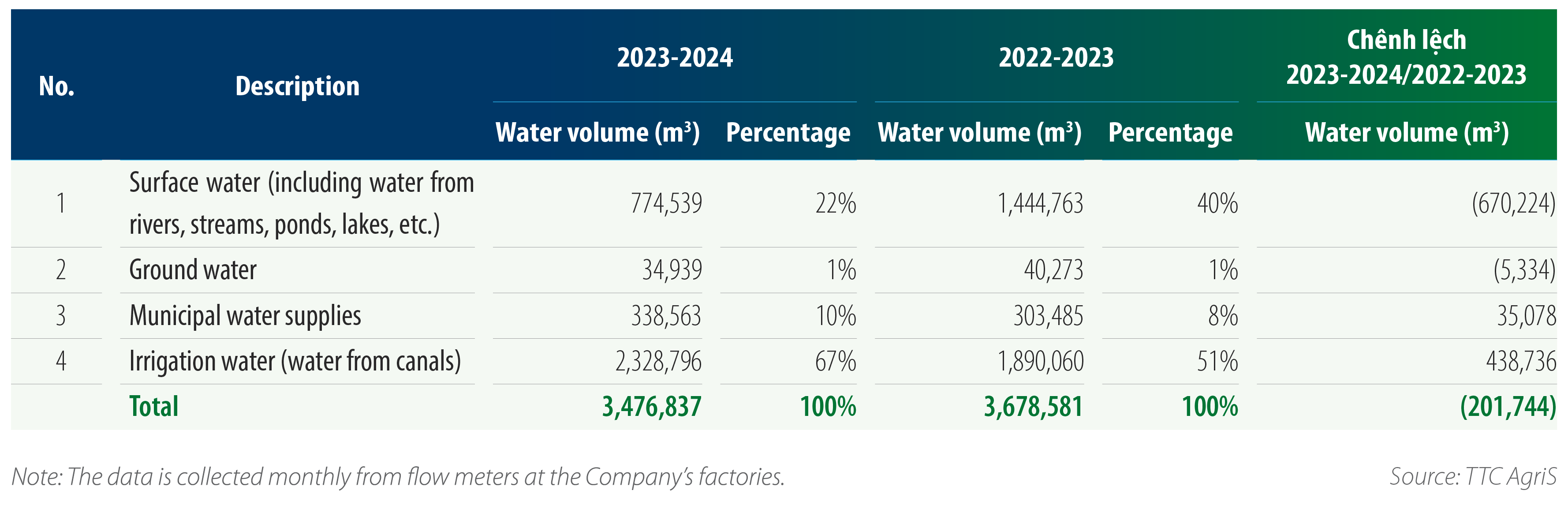
TTC AgriS always adheres to the provisions of Vietnamese law regarding the usage of water, as well as adopts numerous technological measures to reduce the amount of water used. In FY 2023-2024, water consumption decreased despite an increase in sugarcane production. To address this challenge and achieve the goal of optimizing water usage and protecting water sources for the products, the Company issued a Guideline for Water Source Control. This guideline ensures proper management of water supply, distribution, and storage systems, and outlines control measures and treatments when the water source does not meet usage requirements. Water that directly contacts the products must comply with the drinking water standard as stipulated in the National Technical Regulation QCVN 01-1:2018/BYT. Equipment such as filters, containers, pipes, and valves in various production workshops must be regularly inspected, cleaned, and promptly repaired in case of malfunction.
Total volume of water withdrawn by sources
GRI 303-3: WATER RECYCLED AND REUSED
Water discharged from the production process, after passing the cooling system, will have a high temperature ranging from 50 - 52°C. Because this water is impossible to reuse and must be discarded into the environment, the cooling system has to take in water purchased from external channels to continue the cooling process. In order to save and reuse this water, the Company invested in a Cooling Tower system. This helps cool water temperature down to about 35 - 38°C, allowing for the recirculation of used water after the cooling process, reducing the amount of purchased water and saving costs. Overall, the use of this system has helped the Company save approximately 73% of the costs associated with purchasing water from external suppliers.
Besides high water consumption, the agricultural industry is characterized by a strict demand for water quality. The initiative of TTC AgriS to reuse treated effluents in accordance with regulations and to employ an alternative water source demonstrates a commitment to resource conservation and environmental protection. In FY 2023-2024, the Company recorded that 57% of the reused water met the quality standards, consistent with the previous fiscal year. Furthermore, the total volume of treated wastewater increased, highlighting positive progress and the stability of the Company’s environmental solutions.
Key topic
- Biodiversity plays a vital role in maintaining ecosystem balance and development, ensuring the quality of life, food security, human health, and the Earth’s sustainable growth.
- This topic emphasizes biodiversity conservation and management, particularly protecting high-value biodiversity areas and minimizing the negative impacts of organizational activities.
Management approach
- The Company conducts risk and impact assessments on natural habitats before initiating projects or expanding production activities.
- The Company ensures that the habitats of flora and fauna remain undisturbed, while actively preserving and strengthening environmental protection policies in project development areas.
- The Company promotes awareness among employees about the critical importance of biodiversity.
GRI 304-1: OPERATIONAL SITES OWNED, LEASED, MANAGED IN, OR ADJACENT TO, PROTECTED AREAS AND AREAS OF HIGH BIODIVERSITY VALUE OUTSIDE PROTECTED AREAS
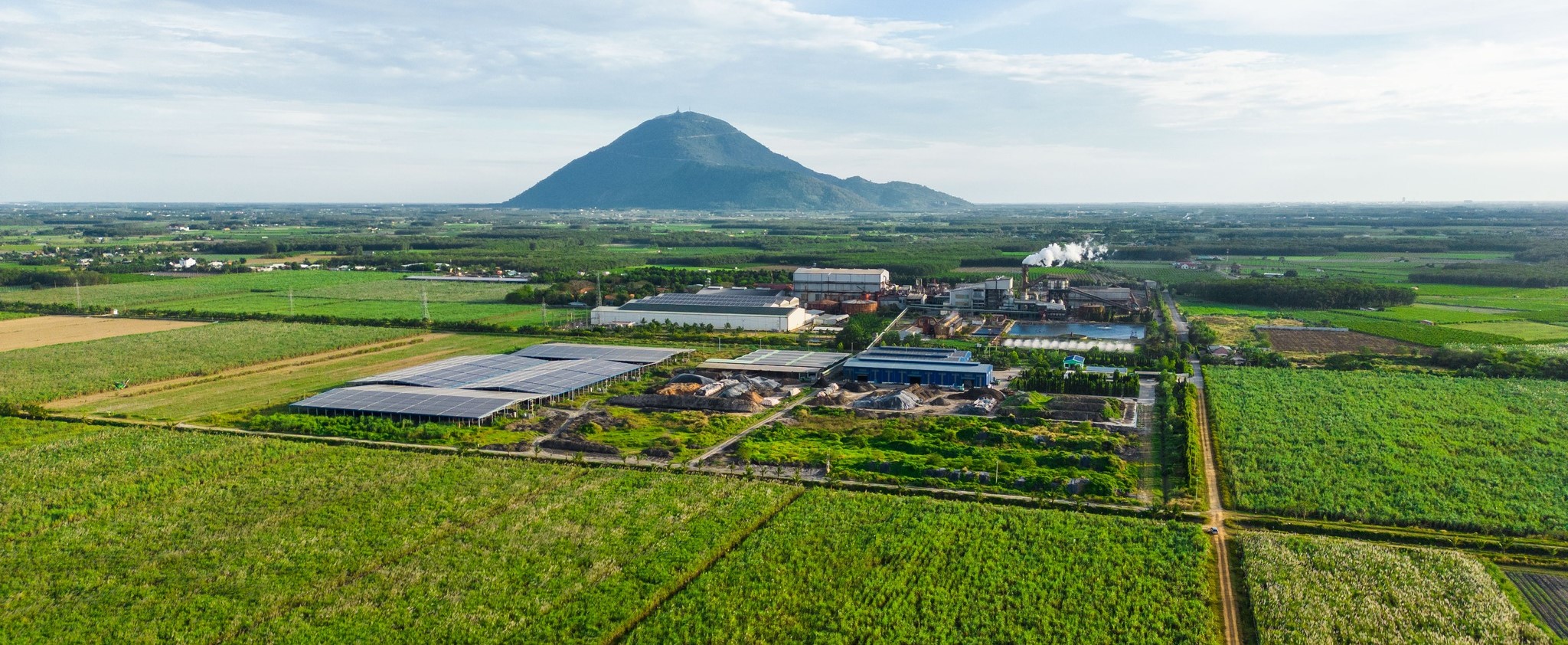
The Company operates exclusively on agricultural land, not forested areas, and its activities are not located near any protected zones. Furthermore, the Company’s Sustainability Policy clearly states that it will not engage in new operations or activities that could harm conservation areas, cultural heritage sites, or restricted zones, in compliance with local regulations.
In its Sugarcane Plantation Handbook, the Company emphasizes the importance of ecosystem protection by prohibiting the hunting of birds, frogs, or any non-pest animals. As a result, the biodiversity risks associated with its agricultural activities are effectively managed and consistently assessed as low.
Key topics
TTC AgriS is a manufacturing enterprise, therefore, its responsibilities to address the greenhouse effect are most clearly manifested through how it approaches the topic of emissions. The Company is currently stringently controlling emissions to ensure an environmentally- and community-friendly production process. The Company issues by-laws on environmental safety and launches various practical projects aimed at the use of clean fuels and the removal of hazardous pollutants and toxic emissions to put a significant portion of the emissions generated during production to good use.
Management approach
The Company is using online software to manage observed data of boiler flue gas automatically and continuously. The Company also equips all of its factories with emission treatment systems that meet the National Technical Regulations QCVN 19:2009/BTNMT on industrial emissions of inorganic substances and dust and other provisions of the Law on Environment; as well as with emissions monitoring systems in accordance with the Circular No. 10/2021/TT-BTNMT on environmental monitoring techniques and the management of environmental quality monitoring information and data. The observed data is then sent directly to each provincial Department of Natural Resources and Environment. In FY 2022-2023, the Company had good management of emissions with no violation was found.
GRI 305-1: DIRECT GREENHOUSE GAS EMISSIONS
Across TTC AgriS’s factories, bagasse and biomass are mostly used in place of coal in boilers to reduce greenhouse gas emissions. At the same time, carbonation technology, which involves the use of CO2 and lime to remove impurities, is applied to refined sugar production in order to capture and reuse the CO2 produced during boiler combustion. This capture rate is estimated to be between 9% and 12% of the total emissions released into the environment.
The Company has ramped up its efforts to offset emissions by launching initiatives like the “10 Million Trees – Embrace Green Future” program. This annual initiative forms a cornerstone of “AgriS Sustainability Commitment,” which targets achieving net-zero emissions by 2035. The ambitious goal is backed by a range of multinational environmental efforts, including the “10 million trees” project, which was launched on December 7th, 2023 to 2030, along with the adoption of 100% biomass fuel by 2025 and a consistent 5% annual reduction in greenhouse gas emissions across sugar production, fertilizer manufacturing, and agricultural activities.
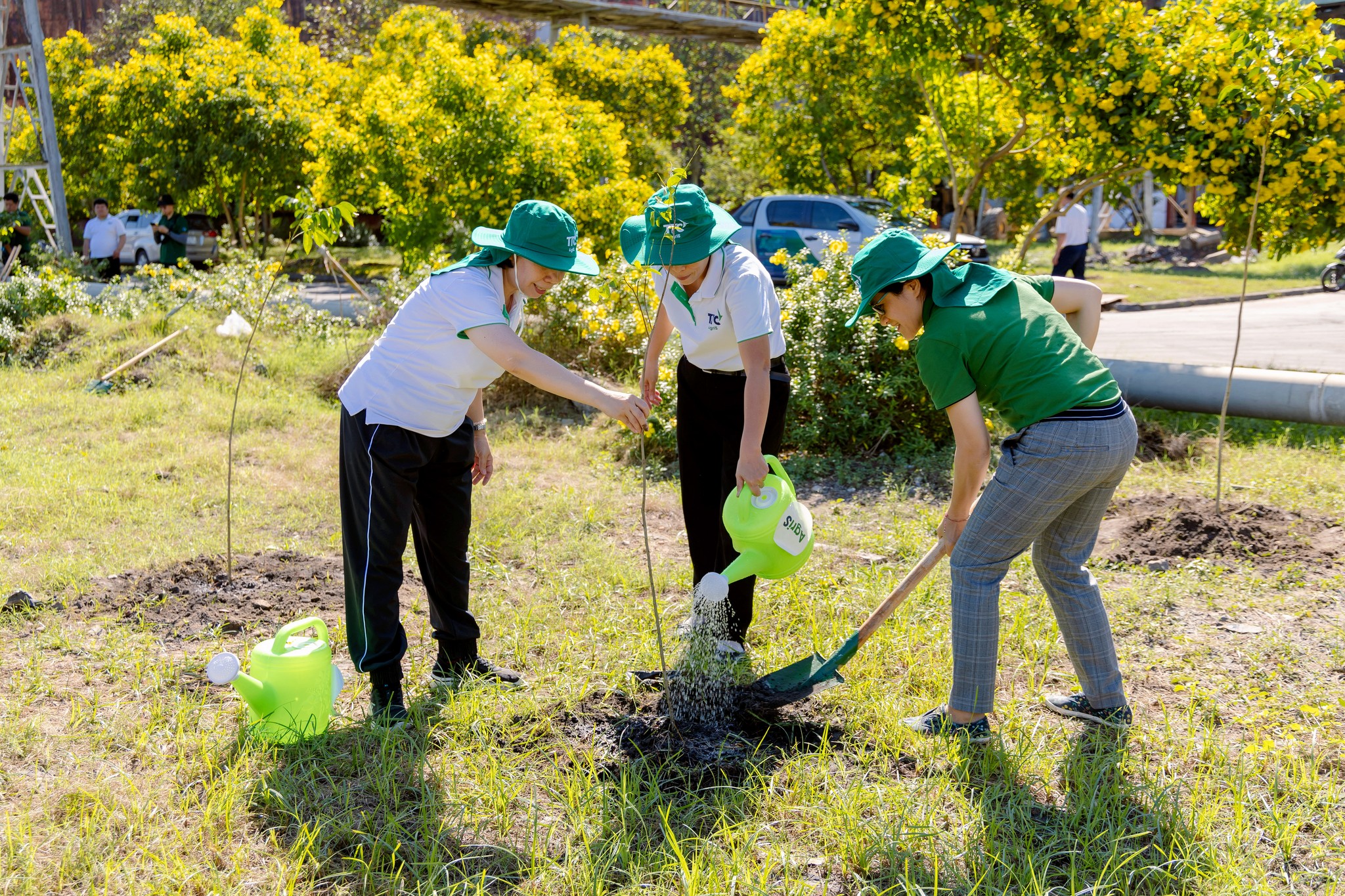
The project’s launch event brought together nearly 2,500 TTC AgriS employees alongside local government officials from areas where the Company operates
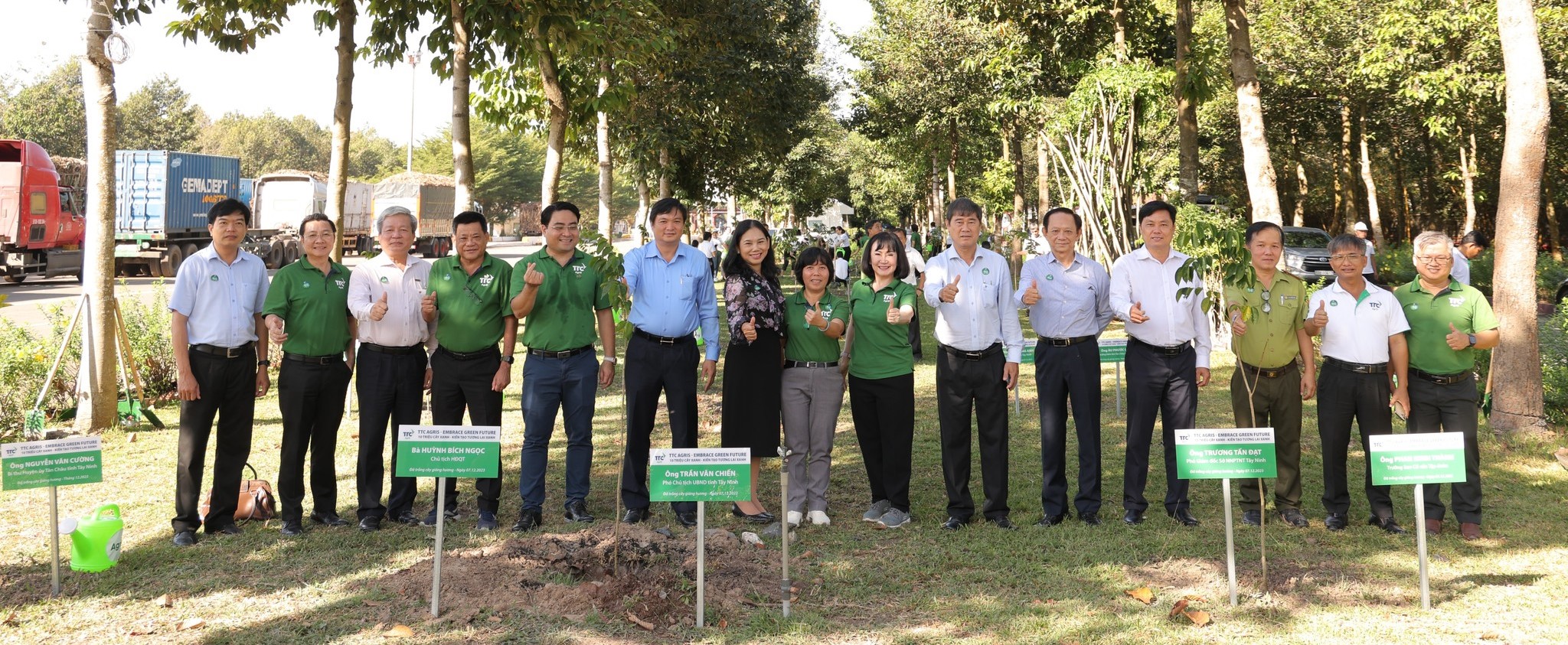
TTC AgriS leadership, together with the authorities of Tay Ninh Province, planted the first trees as part of the TTC AgriS “10 Million Trees – Embrace Green Future” project
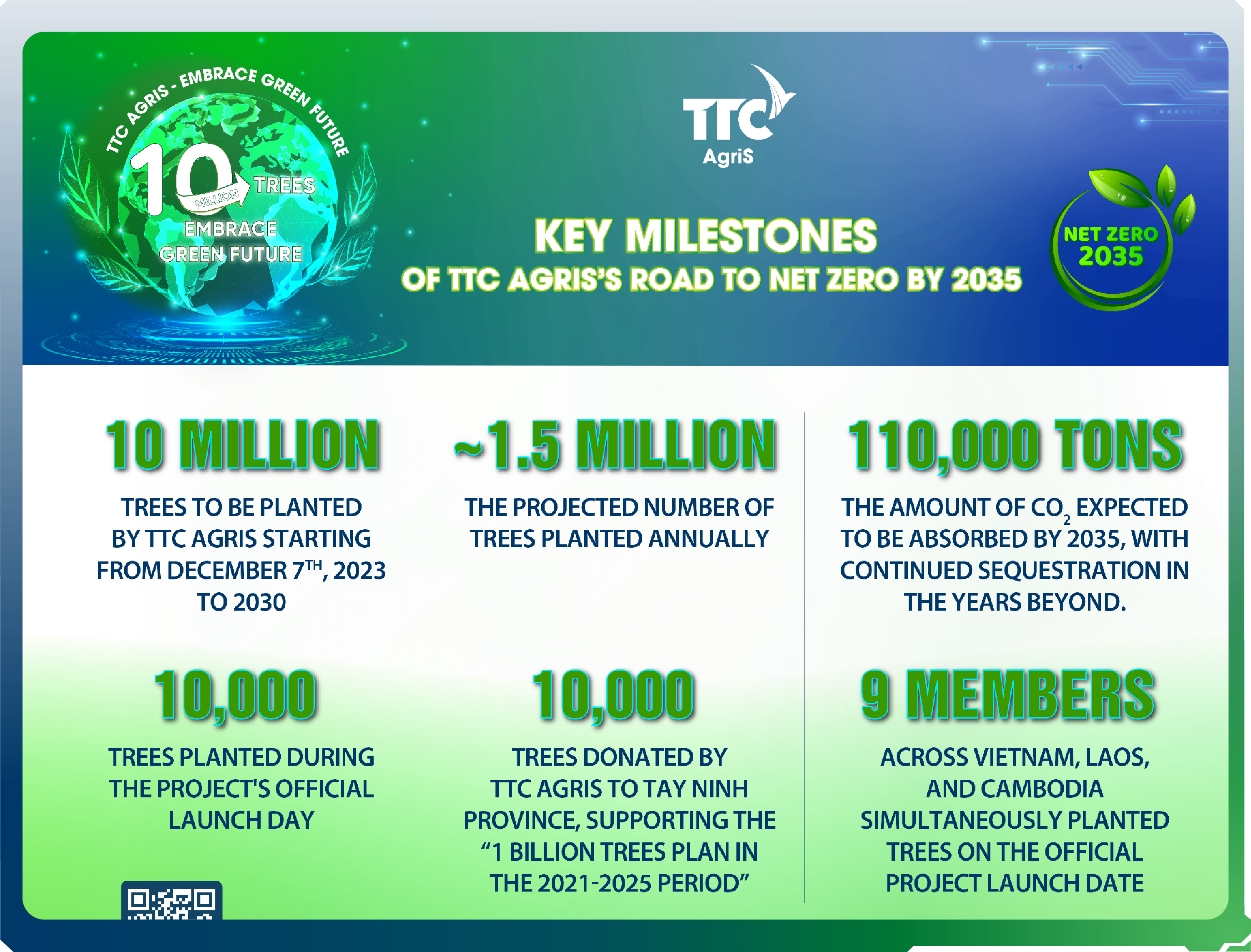
Through the “10 million trees” project, TTC AgriS reaffirms its dedication to supporting national climate goals and implementing a detailed roadmap to reduce greenhouse gas emissions, with the ultimate objective of achieving Net Zero across its entire production value chain by 2035. This initiative also reflects the Company’s strong commitment to sustainable development, aiming to inspire meaningful, positive changes among organizations and businesses pursuing similar goals.
In parallel, TTC AgriS has invested in greenhouse gas reduction projects, including the production of organic fertilizers. This effort minimizes emissions by preventing methane release through controlled aerobic decomposition in windrow composting of livestock manure, Crotalaria plants, and sugarcane byproducts such as mud, ash, and bagasse, instead of allowing decomposition in landfills. Farmers are encouraged to adopt crop rotation with legumes and Crotalaria plants, improving soil health while earning additional income by selling Crotalaria as raw material for fertilizers. In its first year of issuance, the project delivered over 5,500 carbon credits under Verra’s VCS standards. This output is projected to exceed 10,000 carbon credits annually in the coming years, further solidifying its impact on sustainable agriculture and emission reduction.
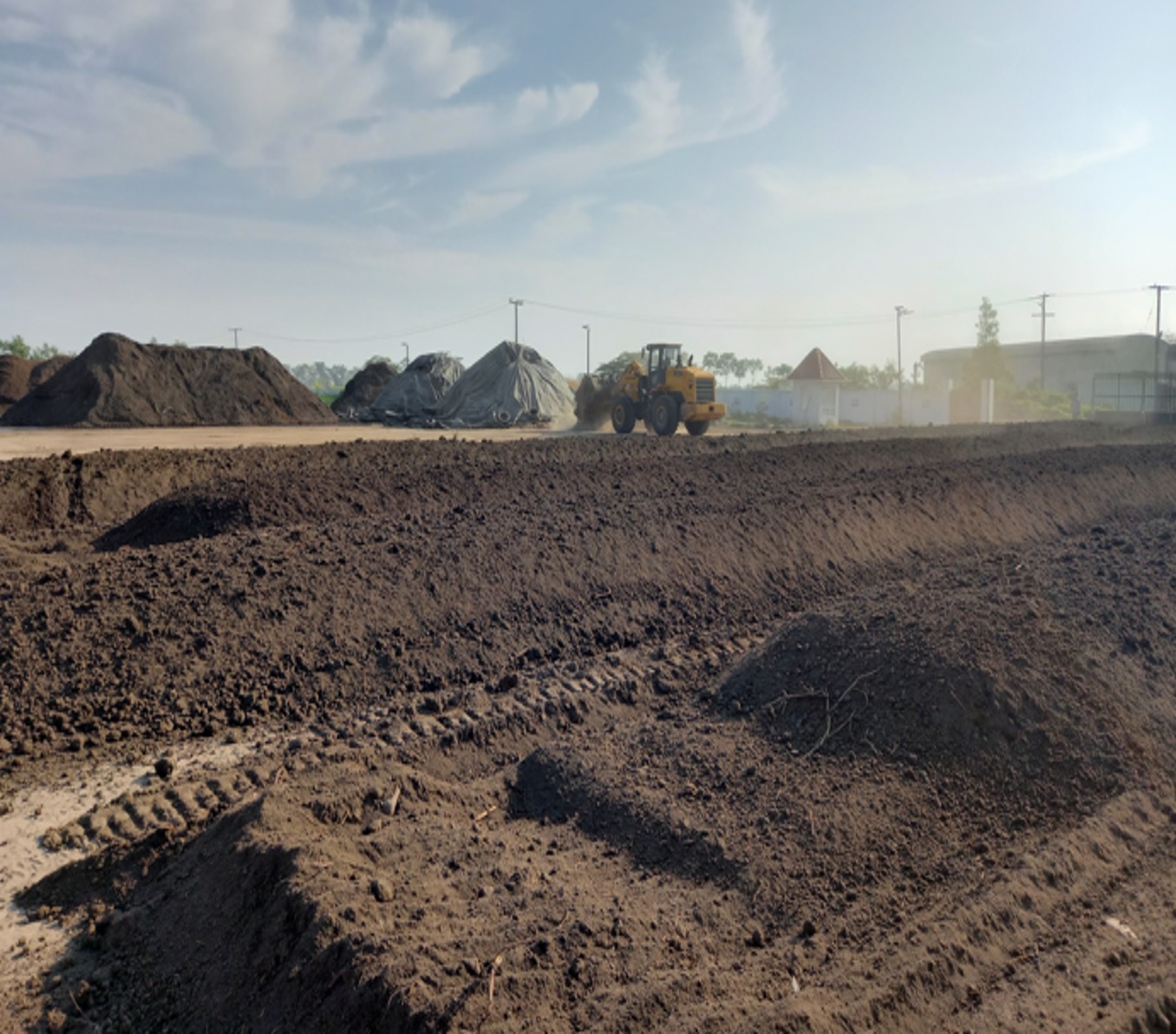
Verified Carbon Standard (VCS) is a globally recognized benchmark for projects targeting greenhouse gas emission reductions. It enables financing for emission reduction and removal initiatives, enhances livelihoods, and safeguards natural ecosystems. Developed by Verra, a leading non-profit organization in environmental credit standards, VCS establishes a rigorous framework to ensure transparency and credibility for emission reduction projects.
TTC AgriS is also collaborating with a South Korean partner to develop a new biochar production plant utilizing waste materials. The project is expected to cut greenhouse gas emissions by more than 4,800 tons of CO2e annually in FY 2024-2025. The plant will produce around 13 tons of biochar daily, equivalent to 3,900 tons per year, and expand the use of organic fertilizers. This initiative not only stores carbon in the soil but also improves soil quality, reduces atmospheric CO2, and contributes to climate change mitigation efforts.
In tandem with emission reduction activities, the Company is also expanding its cultivation of sustainable sugarcane under the Bonsucro standard. In FY 2023-2024, TTC AgriS adopted Bonsucro across all its sugarcane farms in Tay Ninh, increasing the total certified area to 1,580 hectares.
Key topics
As a manufacturing enterprise, TTC AgriS is highly aware of the importance of environmental protection and realizes this awareness into various practical actions. Besides reusing waste generated during the production process to protect the environment, add value, and reduce product costs, the Company manages waste by two disclosures: total effluent volume by quality and destination and total waste volume by type and disposal methods.
Management approach
TTC AgriS sets KPIs for waste management and conducts internal evaluations once a year. In the last FY, no violations regarding effluents and waste management were identified. The Company manages effluents and waste based on the following standards:
- For effluents: The operation of the treatment system complies with the current regulations as outlined in Vietnam Standard 40:2011/BTNMT
- For waste: The Company manages waste through the ISO 14001: 2015 Environmental Management System, ensuring that waste released into the environment meets the committed environmental standards.
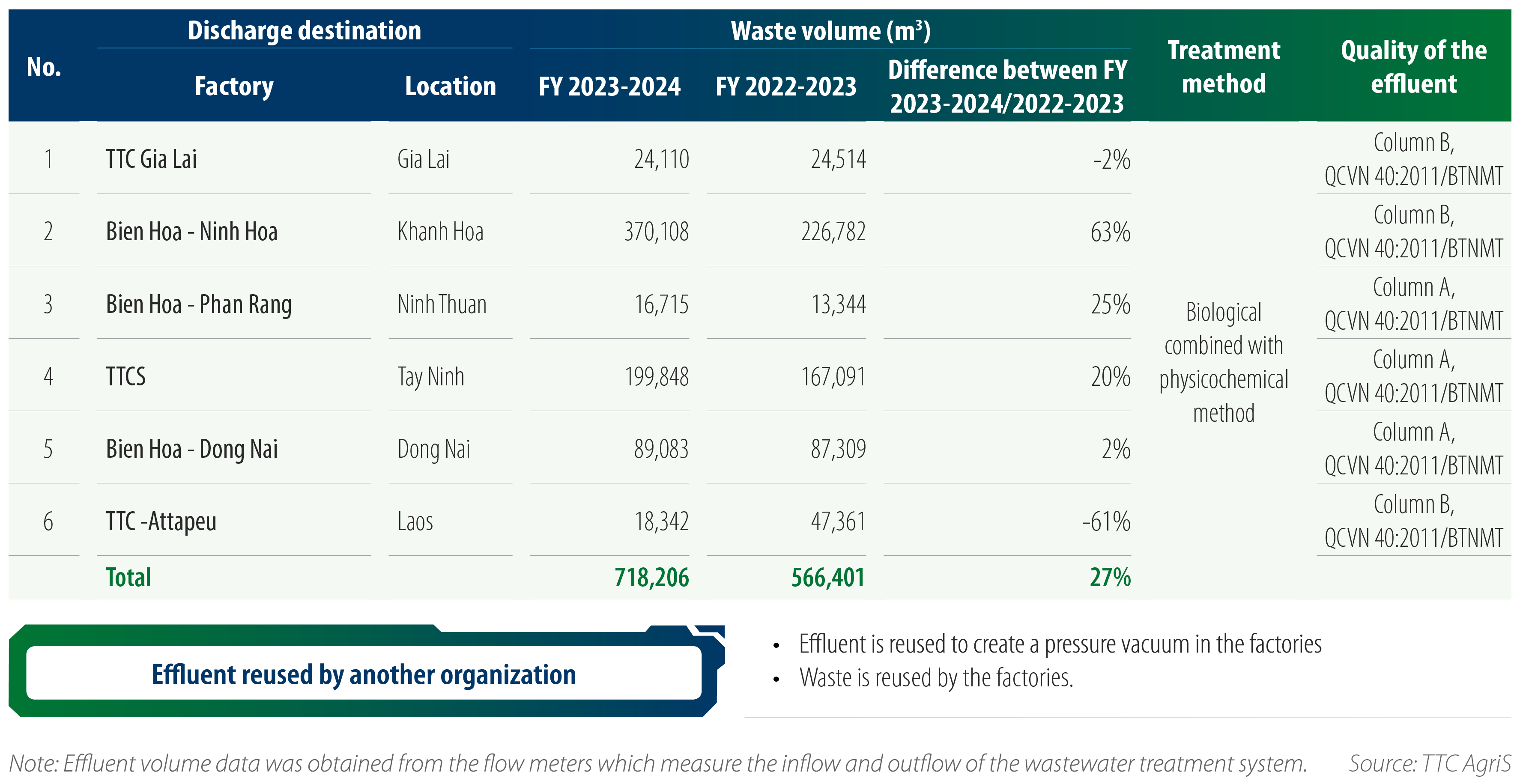
GRI 306-1: TOTAL EFFLUENT VOLUME BY QUALITY AND DESTINATION
The wastewater treatment system at TTC AgriS is operated and maintained in compliance with the QCVN 40:2011/BTNMT standard and legal quality requirements. The effluent after going through the treatment system is reused in sugarcane irrigation and production. This helps the Company save costs and contribute to water resource conservation.
Total volume of effluent by quality and destination in 2023-2024
COD, or Chemical Oxygen Demand, represents the amount of oxygen required to chemically oxidize all organic substances in waste. The COD index is widely used to indirectly measure the volume of organic compounds in water. A low value of COD emission would help the treatment system operate with ease and use fewer chemicals. Over the last three FYs, the actual COD values have been significantly lower than projected due to rigorous control efforts at each factory. This not only minimizes the environmental impact but also contributes to cost-saving in production. In FY 2024-2024, the COD emissions were only 1.06 kgCOD/ton of finished product, a decline of nearly 55% compared to the projected 1.91 kgCOD/ton of finished product.
GRI 306-2: TOTAL WASTE VOLUME BY TYPE AND DISPOSAL METHODS
Bagasse is fully utilized as a fuel for the boiler. It supplies steam and electricity for the factory’s production activities, with excess power being fed into the national grid to generate more profits for the Company. Bagasse also supplies biomass for the boilers, helping reduce the emissions of CO2 and other harmful environmental gasses. With the little amount of CO2 released from the boilers, the Company continues sending them through an emission treatment system, then extracting and using them to remove impurities from Sugar. It helps the Company achieve the dual goal of saving costs along with protecting the environment. When boiler combustion is done, the ash and pressmud left in the boilers are used as probiotics and fertilizers to improve farmland, soil fertility, and sugarcane yield.
Waste generated during the production process is categorized and subjected to appropriate treatment methods. Most of the waste is recycled and composted to produce fertilizers. For waste that poses potential environmental hazards, the Company hires specialized waste management units to ensure the quality of treated waste adheres to legal requirements and has no negative environmental impact.
Waste by type and disposal methods at TTC AgriS’s factories
Key topics
Understanding the importance of complying with the legal regulations that directly impact the Company’s reputation and brand, TTC AgriS manages all of its activities with respect to the rule of law. However, with regulations concerning the Environment, Economy, and Society, the Company adheres to higher standards than current regulations to steer the Company to sustainable development and greater contributions to the community and society. It is done voluntarily as part of the Company’s social responsibility.
Management approach
The Company’s objective in managing issues related to Environment, Economy, and Society is to ensure compliance with local laws and the Vietnamese legal system. Therefore, the Company focuses on protecting the environment, building a safety culture in the enterprise, and cultivating a safe and accident-free working environment. The Company also provides periodic monitoring reports to the relevant agencies as required by law:
- Annual reports:
- Report on environmental protection;
- Report on the implementation of surface water use permits;
- Report on the implementation of underground water use permits;
- Report on the quality control of automatic and continuous effluent and emission monitoring system (RA);
- Report on chemicals;
- Report on occupational safety and hygiene.
- Semi-annual reports:
- Report on work-related accidents;
- Report on medical activities;
- Report on fire and rescue.
Throughout its journey, TTC AgriS has always based its growth on green business strategies to establish its competitive position and pave the way for its ambitions to expand into international markets. TTC AgriS is actively implementing numerous solutions to become a green and sustainable company that contributes to local economic development and societal well-being.
TTC AgriS also worked hard to obtain certifications of Bonsucro, ISO 45001, and ISO 14001 to actualize its sustainable development policies. Importantly, TTC AgriS was the first company in Vietnam to be certified by Bonsucro, having met all the organization’s standards for sugarcane raw material production, and sugar and molasses products.
The Company’s consistent recognition through various awards related to sustainable development and communitysocial activities over consecutive years testifies to TTC AgriS’s sense of responsibility and its relentless efforts in adhering to Environmental, Economic, and Social standards.
VNSI20
- Top 20 Listed Companies in the Sustainable Development Index (HOSE)
- Listed in VNSI20 for the seventh consecutive year with an ESG score of 92%
- Periodic assessment in July
BONSUCRO
- A globally respected organization that establishes international standards to advance the sustainable production, processing, and trade of sugarcane worldwide.
- To meet the growing demand for Bonsucro-certified sugar in 2024, TTC AgriS has significantly expanded its certification coverage, increasing the area from 100 hectares to 1,580 hectares at its sugarcane farms in Tay Ninh. This expansion will enable the production of 9,000 tons of Bonsucrocertified sugar, set to begin in May 2024.
- May 2024
ISO 45001 & 14001 CERTIFICATIONS
- Bureau Veritas, BSI
- Successfully achieved ISO 45001 and 14001 certifications for all member units
- June 2024