
Key topics
To attract and retain talents, as well as build a sustainable team of successors, TTC AgriS places particular emphasis on human resources by:
- Creating a friendly and professional working environment;
- Implementing competitive compensation and benefits policies for employees;
- Establishing a policy that ensures equal employment opportunities, devoid of any form of discrimination;
- Recruiting talents from multinational companies/groups across various fields;
- Creating job opportunities in the labor market and in localities where the Company operates;
- Localizing the workforce in areas where the Company places factories and headquarters;
- Ensuring occupational health and safety for employees;
- Providing training opportunities for employees to enhance their professional and soft skills.
Management approach
Policies are developed based on ensuring that all human resources activities comply with the Law on Labor and the International Labor Standards – ILO.
- All employees at TTC AgriS are recognized for their contributions through performance evaluations and are rewarded based on their capabilities;
- Human resources policies of the Company are provided in the form of normative documents and are continuously updated to ensure the maximum benefits for the employees;
- The Company continuously improves its welfare and training policies to enhance employee satisfaction and long-term engagement, as well as cultivate potential successors.
These policies not only ensured compliance with laws and international standards but also aimed to create a fair, growth-oriented, and sustainable working environment for all employees of TTC AgriS.
GRI 401-1: NEW EMPLOYEE HIRES AND EMPLOYEE TURNOVER IN FY 2023-2024
In FY 2023-2024, amidst the fluctuations and competition of the labor market, improving work efficiency while ensuring employee welfare remained a core focus for TTC AgriS’s leadership. The Company also undertook a robust restructuring of its human resources, aiming to build a dynamic, highly skilled workforce that aligns with its international market expansion objectives.
Given its focused operations in the agriculture sector, TTC AgriS saw some fluctuations in workforce numbers, particularly in temporary positions, which varied throughout the year and peak during high-demand harvest seasons.
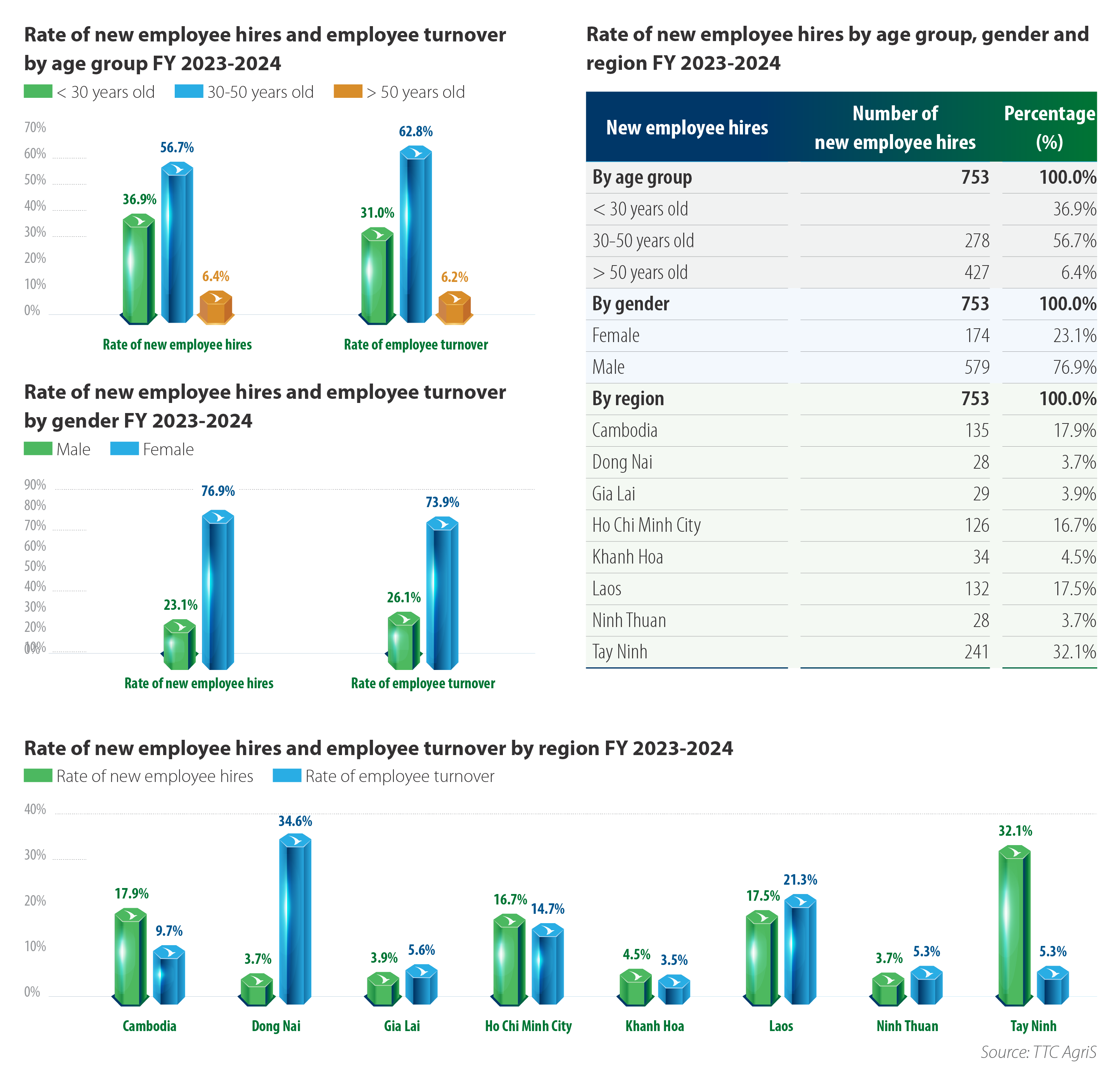
Over the past FY, the Company hired 735 New employees primarily to support factories and raw material areas during production and business peaks. Of these, 427 employees were aged 30-50 (56.7%), while 278 were under 30 (36.9%). Based on actual production needs, the Company adapted its workforce seasonally. Labor was reduced after peak production periods to optimize costs in accordance with the actual demand. Meanwhile, all employee benefits were maintained, including for temporary employees. Consequently, TTC AgriS consistently saw high rates of employee return at the start of each new production cycle
GRI 401-2: BENEFITS PROVIDED TO FULL-TIME EMPLOYEES
Far beyond a mere investment in employees, welfare expenses reflects the Company’s commitment to the growth and well-being of its workforce. Comprehensive welfare benefits not only help TTC AgriS attract and retain talent but also strengthen engagement, boost morale, and enhance employee productivity.
In FY 2023-2024, the total welfare costs for employees reached nearly 230 billion VND an increase of around 9% from the previous year. The total cost for insurance provisions in the welfare cost structure surpassed 62 billion VND, a 4,6% increase compared to the same period.
|
Employee benefits Year 2023-2024 |
||||
|
Welfare Name |
Oh yes time |
Contract/ BCase Time |
Cost (Bronze) |
Proportion (%)
|
|
Social insurance |
X |
X |
50,991 |
22.20% |
|
Social health insurance |
X |
X |
7,479 |
3.26% |
|
Unemployment insurance |
X |
X |
2,693 |
1.17% |
|
Trade union |
X |
X |
4,888 |
2.13% |
|
Accident insurance |
X |
X |
341 |
0.15% |
|
Health insurance |
X |
|
700 |
0.31% |
|
Others |
X |
X |
162,531 |
70.78% |
|
Summing up |
|
|
229,623 |
100% |
In addition to ensuring full benefits for employees as mandated by law through covering the mandatory insurance costs, the Company also places significant emphasis on additional welfare benefits beyond salaries, with these benefits accounting for nearly 70% of the total welfare cost. In addition to ensuring full benefits for employees as mandated by law through covering the mandatory insurance costs, the Company also places significant emphasis on additional welfare benefits beyond salaries, with these benefits accounting for nearly 70% of the total welfare cost.
|
Welfare Policy |
Detail |
|
Benefits policy for Full-time employees |
- Shuttle bus for employees working at factories; - Regular health check-ups for employees, with increasingly advanced and diversified packages offered every year; - Bao Viet Healthcare insurance package – comprehensive health care for mid level and senior management; - Periodic vacation trips; - Gifts for holidays/Tet and other special events; - Allowances including lunch, overtime, phone charge and hazardous work allowances for employees. |
|
Benefits policy for employees working abroad |
- An increase of 30% - 40% in income for employees working in foreign countries such as Laos, Cambodia, etc.; and at the end of the assignment, salary adjustments and new position appointments (if available) will be considered based on capabilities; - An additional allowance ranging from 3 - 5 million VND/person; - Right to bring spouses and children to the countries where they work to live together: the Company shall cover 50% of regular school fees for two legitimate children of the employees, in case they are under 18 years old at school in the parents’ working area; - Opportunity to visit home 6-9 times/year with travel expenses covered by the Company. |
|
Benefits policy for female employees |
- Strict adherence to legal regulations in the recruitment and employment of female employees; - Emphasis on gender equality in matters of recruitment, employment, training, salary, commendation, promotion, payment, working conditions, occupational safety and health, working hours, rest hours, and other Key and spiritual welfare benefits; - Maternity leave in accordance with the law; - Guaranteed employment for female employees after maternity leave. |
|
Additional income |
- 13th-month salary; - Year-end performance bonus; - Seniority bonus; - Bonus for outstanding performance for three consecutive years; - Incentive bonus during peak seasons. |
| Life insurance |
Available for management personnel with more than 5 years of seniority. |
GRI 403-1: PARENTAL LEAVE
TTC AgriS always respects and values gender equality. In addition to adding specialized medical examinations during the annual health check-ups, parental leave was one of the essential factors demonstrating TTC AgriS’s care for its workforce. The Company ensures full maternity-related benefits for female employees, as required by the Labor Law. This commitment contributes to creating a humane working environment that supports a balance between work and personal life. The Company strictly refrains from dismissing or unilaterally terminating the labor contracts of female employees on the pretext of their marriage, pregnancy, maternity leave, or care for a child under 12 months, except in cases where the labor contract expires or the Company ceases its operations. Furthermore, during pregnancy or while nursing a child under 12 months, if female employees are assigned heavy-duty tasks, they will be transferred to lighter tasks and will not be requested to work overtime.
TTC AgriS is always attentive and supportive of its female employees throughout their motherhood journey:
- Pregnancy period: Female employees are entitled to take 5 pregnancy care leaves/pregnancy period, each leave is 1 or 2 working days for the pregnant woman having unusual medical conditions or living far from medical facilities.
- Childbirth period: Female employees can take 6-month maternity leave before and after childbirth. Male employees, when their wives give birth to their children, are entitled to parental leave following the Law.
- Childcare period: Female employees nursing a child under 12 months are entitled to a 1-hour off from work each day without loss of pay.
In FY 2023-2024, out of 31 cases who took parental leave, 21 employees returned to work, 8 employees remained on maternity leave, while 2 chose to resign as they wanted to spend more time taking care of their children and running their own businesses.

Key topics
Occupational health and safety always occupy the top priority at TTC AgriS, as ensuring the health and safety of employees is not only the Company’s responsibility but also contributes to preserving human resources, enhancing production efficiency and employee productivity, and reducing healthcare costs resulting from workrelated accidents, thereby leading to economic benefits.
Administration methods
Identification and assessment of occupational health and safety risks remained among the top priorities in the Company’s production and business activities. Based on this procedure’s results, the Company developed action plans to prevent risks that could compromise employee safety and lead to property loss.
To effectively implement this initiative, the Company established an Occupational Health and Safety Management System (also referred to as the Normative Document), structured in alignment with local laws and international standards such as ISO 45001, IFC, World Bank, ADB, and ILO. This system was officially issued and deployed across all of the Company’s production and business operations, and was extended to its supply chain.
Additionally, the Company established both regular and adhoc monitoring procedures, which occurred on an annual basis, to ensure compliance with the Occupational Health and Safety Management System. These measures aim to maintain the system’s validity and effectiveness throughout its operational cycle.
GRI 403-2: HAZARD IDENTIFICATION, RISK ASSESSMENT AND INCIDENT INVESTIGATION
In FY 2023-2024, TTC AgriS recorded no violations related to occupational health and safety.
Results from occupational medical examinations did not reveal any occupational diseases or injuries in either the production areas or offices. However, there was one recorded occupational accident. In response, the Company promptly provided the affected employees with the necessary support and compensation to facilitate their swift recovery and return to work. Additionally, the Company conducted a thorough investigation of the incident and implemented preventive measures to avoid recurrence. TTC AgriS continuously worked to improve and maintain a strict risk management process, which resulted in a steady reduction in workplace accidents over recent years.
Compliance: The Company works with relevant authorities on an annual basis to monitor the working environment. The authorities evaluate dust concentration, noise levels, vibrations, and more. Based on these evaluations, the Company provides employees with additional uniforms and protective gear.
Training: The Company enhances the communications and training revolving around occupational health and safety, as well as applying an Occupational Health and Safety Management System according to ISO 45001:2018 and ISO 14001:2015 standards. This is done to increase employees’ awareness of occupational health and safety, contribute to the “zero accident or incident” goal, and build a safety culture in the Company.
In the past FY, in addition to legally mandated training on occupational health and safety, fire prevention, and first aid for employees, the Company organized supplementary training sessions to further enhance knowledge in occupational health and safety, including:
- Construction safety supervision training for managers involved in construction projects,
- Annual safety operation training for employees who handle machinery,
- Occupational health and safety training specifically for the sugar supply chain, including farmers, sugarcane owners, and team leaders.
Health check-up program: The Company provides regular health check-ups for its employees and frequently monitors medical results for those working in high-risk areas.
- For employees working under normal conditions, the Company offers regular health check-ups once a year;
- For employees engaged in strenuous or hazardous positions, as well as those working in areas in which the environmental indicators surpass National Standards, the Company, by Law on Occupational Health and Safety, offers health check-ups and screenings for occupational diseases twice a year and;
- In the event an employee is diagnosed with occupational diseases, the Company will monitor and plan examinations and re-examinations according to the recommended frequencies
Key topics
In an increasingly competitive and rapidly changing market, developing high-quality human resources, nurturing talent, and cultivating potential successors have become urgent and strategic priorities for every business. This approach not only provided the groundwork for TTC AgriS’s survival but also served as a foundation for sustainable growth and created a competitive advantage for the Company.
Management approach
Annually, the Company established and implemented comprehensive training plans for all employees, from staff to management, across all departments and factories. This training became a crucial part of the Company’s development strategy, since it enhanced the capabilities and efficiency of all employees.
The Company facilitated for employees to participate in training programs and encouraged a culture of continuous learning. This helped build a positive work environment where everyone had opportunities for personal growth. Employees were encouraged to learn and apply new knowledge in their daily tasks, which enhanced work performance and improved the quality of TTC AgriS’s products and services.
GRI 404-1: AVERAGE HOURS OF TRAINING PER YEAR PER EMPLOYEE
In FY 2022-2023, TTC AgriS focused on training programs that span a variety of professions and functions and are aligned with the development roadmap for all levels of employees. The Company also applied technologies, such as LMS and Microsoft Teams, which received positive feedback from participating employees.
In the past year, the Company organized 732 courses with over 15,711 participants. The total training costs recorded during this period amounted to 10.2 billion VND. The Company substantially invested in human resource development, which enabled employees to enhance their capabilities and be better prepared for future challenges. This approach not only improved work performance but also cultivated a high-quality workforce, contributing to the Company’s sustainable growth.
|
Indicator |
Average hours of training per year per employee |
|
Female |
36.62 |
|
South |
44.54 |
|
Company personnel |
42.64 |
As of 30/6/2024, TTC AgriS has a total of 2,452 employees, of which 2,499 employees, of which 100% participated in the training.
|
Quota |
Professional staff/ Technical workers |
Expert |
Primary |
Mid-level |
Senior |
Amount |
|
Total training hours (Hours) |
57,844 |
21,665 |
16,657 |
9,718 |
663 |
106,547 |
|
Total number of employees participating in the training (People) |
1,380 |
599 |
268 |
247 |
5 |
2,499 |
|
Average training hours (Hours/person) |
41.92 |
36.17 |
62.15 |
39.34 |
132.60 |
42.64 |
GRI 404-2: PROGRAMS FOR UPGRADING EMPLOYEE SKILLS AND TRANSITION ASSISTANCE PROGRAMS
The Company implemented 732 training programs during the FY with 55% being internal training and 45% external. The training programs were divided into five main categories: (1) Onboarding training – 10.11%, (2) Laws and certification requirements for standards and quality – 29.23%, (3) System operational capacity, database management, and data analysis – 3.28%, (4) Soft skills training – 0.82%, (5) Leadership skills training – 3.83%, (6) Professional skills training – 52.73%.
Programs for upgrading employee skills and transition assistance programs
|
Training Group |
Number of programs |
Number of programs by tier group |
||||
|
Employee |
Expert |
Primary management |
Middle management |
Senior management |
||
| Onboarding |
74 |
22 |
20 |
22 |
10 |
0 |
|
Laws and certification requirements for standards and quality |
214 |
148 |
44 |
18 |
4 |
0 |
|
System operational capacity, database management, and data analysis |
24 |
4 |
16 |
4 |
0 |
0 |
|
Soft skills |
6 |
0 |
0 |
2 |
4 |
0 |
|
Leadership skills |
28 |
0 |
4 |
6 |
8 |
10 |
|
Professional skills |
386 |
226 |
72 |
66 |
2 |
2 |
|
Total |
732 |
400 |
156 |
118 |
46 |
12 |
GRI 404-3: PERCENTAGE OF EMPLOYEES RECEIVING REGULAR PERFORMANCE AND CAREER DEVELOPMENT REVIEWS
100% The Company appraises the performance of all employees on an annual basis and uses the results to determine their rewards and recognition.

Key topics
TTC AgriS always values the contributions and dedication of its employees, and female employees in particular, for the Company’s shared success. Over the years, the Company has been trying to develop comprehensive, fair, and competitive benefit policies to attract and retain talents with reasonable remuneration policies and a dynamic working environment, while always treating them fairly and ensuring equal opportunities in training, development, and promotion. The Company practices non-discrimination based on gender, ethnicity, skin color, social class, belief, religion, etc.
Management approach
- Ensure employees are fully informed that they enjoy the same opportunities, and facilitate development opportunities for female employees;
- Organize competitions and contests to motivate employees, and provide opportunities for young and senior employees to meet and share their perspectives to diversify opinions and perspectives for the Company’s holistic development;
- Establish an equal environment that encourages female employees to pursue leadership roles.
GRI 405-1: DIVERSITY OF GOVERNANCE BODIES AND EMPLOYEES
At TTC AgriS, each employee plays a crucial role in the Company’s success, particularly in fostering innovation and executing the business strategy, thereby supporting sustainable growth and reaching key milestones. Guided by the philosophy that “People are the most valuable asset of the enterprise,” TTC AgriS values and proactively manages human resources, focusing on training and talent development. This approach enhances competitiveness and reinforces a pioneering position, allowing the Company to adapt flexibly to new market trends and achieve the long-term objectives set by the executive board.
From FY 2023-2024, TTC AgriS has embarked on a transformative journey, aiming to cultivate a high-skilled workforce, master advanced technologies, and sustainably expand into global markets while preserving the company’s core identity. In an increasingly competitive landscape with a limited supply of high-quality talent, TTC AgriS is committed to developing its workforce and implementing key initiatives, including:
- Apply new recruitment and training process for a seamless integration;
- Conduct periodic competency assessments for all employees to evaluate individual capabilities, ensuring completion of training programs that enhance skills to meet international standards. This includes restructuring and reorganizing human resources to place the right people in the right roles;
- Ensure fairness and reasonability in wage payments; promote benefits and welfare, design an innovative bonus structure tailored to positions to gain a competitive edge in talent attraction and retention;
- Promote new ideas, improve workflows and eliminate redundant activities to optimize TTC AgriS’s overall performance;
- Develop a safe, fair, and civilized working environment. Build a comfortable working environment that fosters employee security and commitment.
GRI 405-2: RATIO OF BASIC SALARY AND REMUNERATION OF WOMEN TO MEN
The human resource management philosophy of TTC AgriS is based on practical factors such as “Fairness in recruitment”, “No disparities in salary and remuneration”; “Equal promotion opportunities for both genders”, “Specialized policies for women’s health and training”, etc. TTC AgriS ensures female employees are always treated fairly, paid according to their capabilities, receive appropriate benefits, and have equal opportunities for development and promotion as their male counterparts.

In FY 2023-2024, the Company organized 21,897 training hours for female employees, averaging 36.62 hours/female employee with a total cost of nearly VND 3.3 billion. The courses were of high quality, with flexible and efficient schedules.
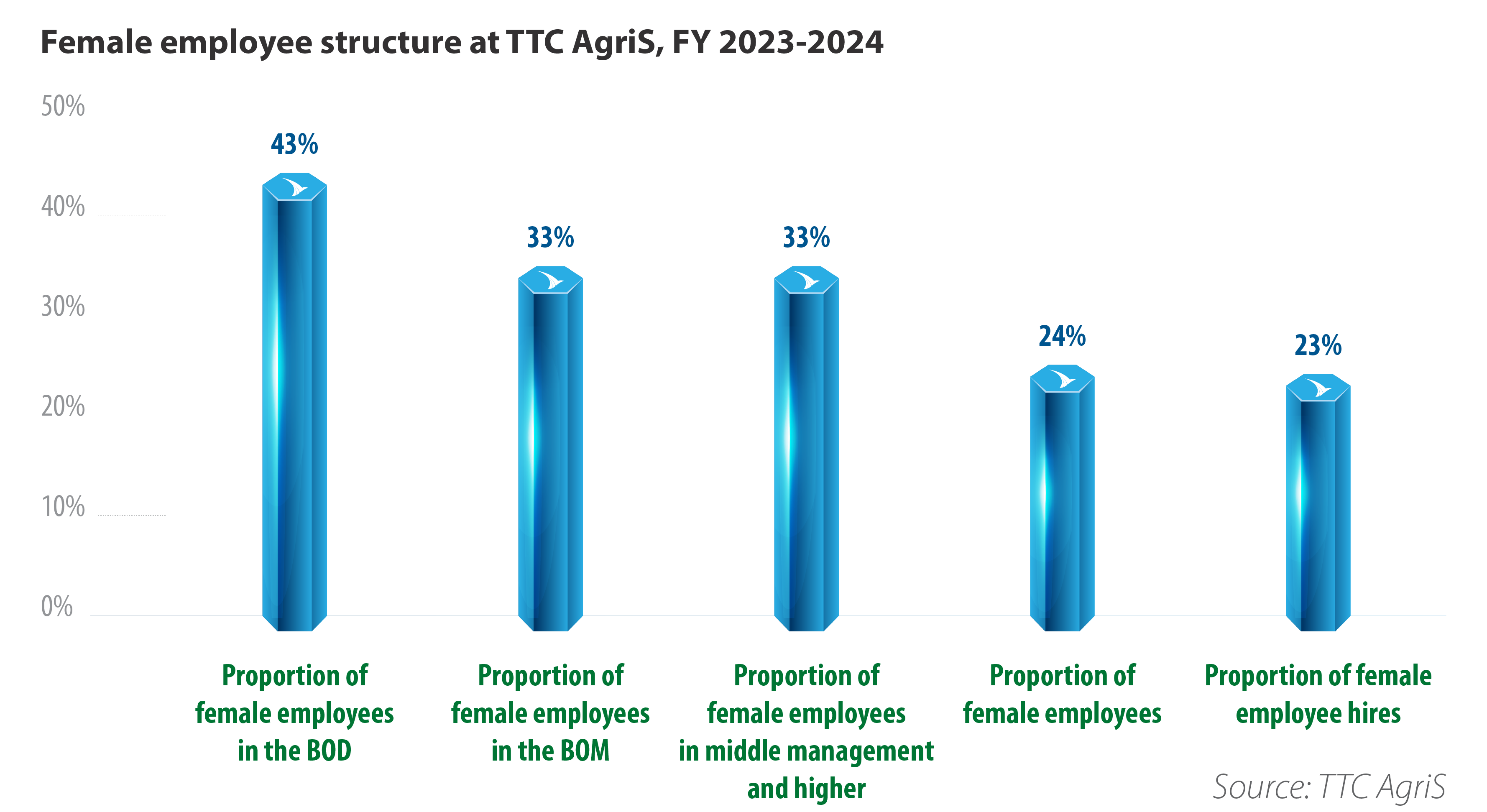
Paying great attention to gender equality and women empowerment, TTC AgriS has always worked hard to maintain and increase the proportion of female employees. The most prominent example lies in its transformation of the leadership structure, especially in the BOD, 3/7 members (43%) are women, including the Chairlady. This reflects TTC AgriS’s aspiration for gender diversity and equality in the workplace.
Key topics
TTC AgriS always adheres to the legal regulations of Vietnam and strives for higher standards of employment and workers’ rights. This is achieved through policies that prevent discrimination in the workplace, protect the rights and interests of employees, and prohibit child labor.
Management approach
- Ensure all employees have equal access to opportunities for training and development, devoid of any form of discrimination, regardless of any situations or factors such as gender, family circumstances, origin, and so forth;
- Ensure gender equality in HR policies, recruitment processes, and salary and benefits systems;
- Establish a professional and fair environment that encourages all employees to pursue promotions and recognition;
- Implement activities to protect and promote freedom of association and collective bargaining;
- TTC AgriS strictly complies with legal regulations regarding children’s rights and ensures no employment of children under the legal working age.
GRI 406: DISCRIMINATION
For details, refer to Human Resources and Training and GRI 405 - Diversity and Equal Opportunity
GRI 407: FREEDOM OF ASSOCIATION AND COLLECTIVE BARGAINING
In FY 2023-2024, TTC AgriS recorded no incidents where the freedom of association and collective bargaining were at stake.
To ensure the rights of the employees, TTC AgriS and the employee representatives have unanimously approved all provisions of the Collective Bargaining Agreement. The adoption and strict compliance with all provisions of the Collective Bargaining Agreement are evidence of TTC AgriS’s efforts to improve its HR policies and labor relations activities.
GRI 408: CHILD LABOR
TTC AgriS strictly prohibits the use of child labor and has established an employment minimum age of 18 years or older. The rights and benefits of employees at TTC AgriS are guaranteed based on the provisions of the Law on Labor.
Key topics
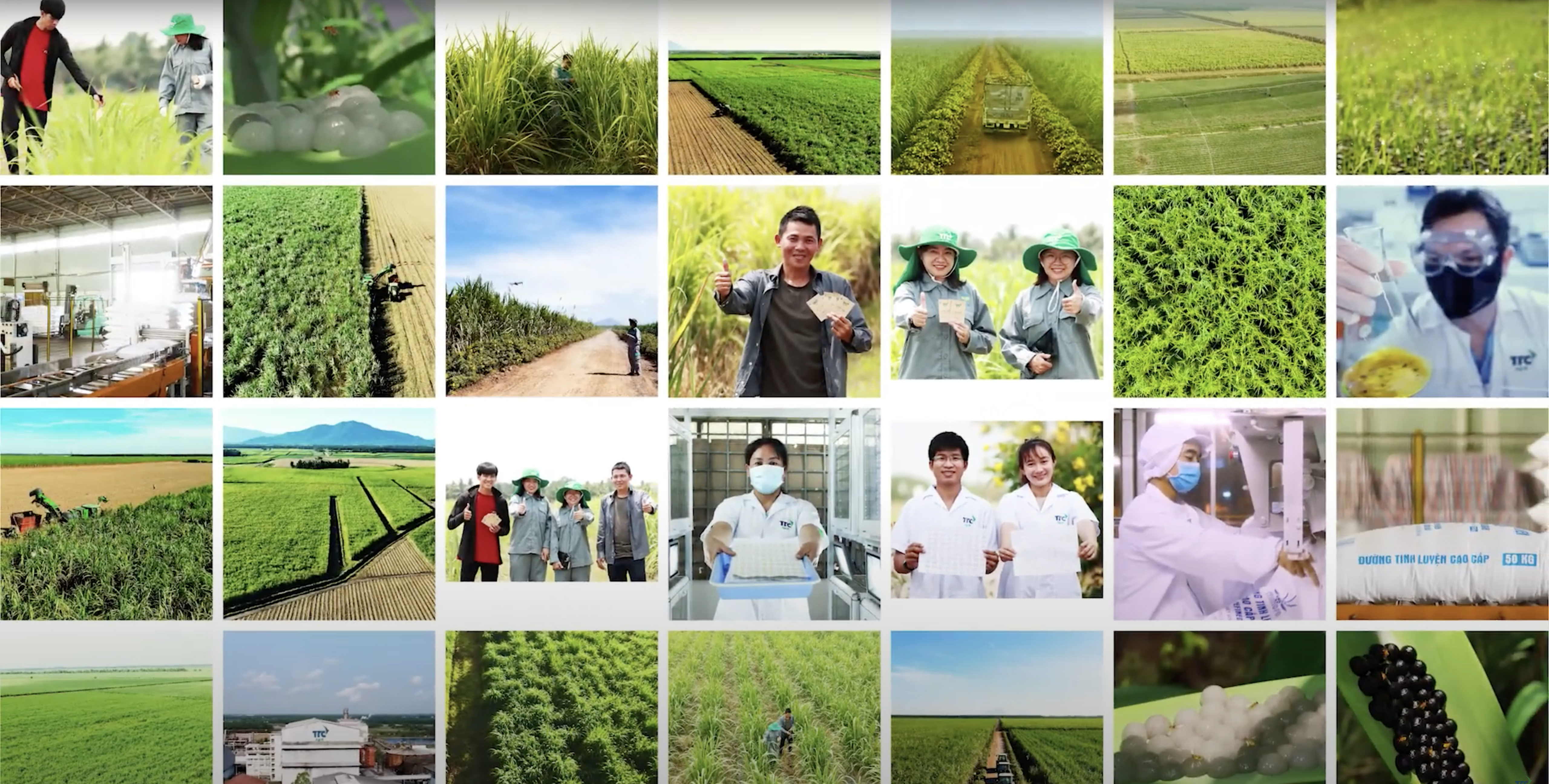
“Local development” has always been the top priority in social responsibility activities at TTC AgriS. The Company consistently partners with local authorities to alleviate poverty and stabilize the lives of the local residents.
Management approach
TTC AgriS currently owns 10 sugar factories located in Tay Ninh, Khanh Hoa, Dong Nai, Gia Lai, and Ninh Thuan of Vietnam, as well as in Laos and Cambodia. TTC AgriS also owns large key areas spanning these three countries. In areas where TTC AgriS’s factories are situated, TTC AgriS provides stable employment opportunities for local labor, creating over 40,000 jobs. This contributes to increasing local income, boosting the local economy, and bringing about positive impacts on these communities. In areas where TTC AgriS has sugarcane plantations, TTC AgriS ensures stable employment for farmers and helps them prosper from sugarcane cultivation by employing modern perspectives and professional approaches. As a result, these farmers enjoy higher incomes and favorable welfare policies.
GRI 413-1: OPERATING WITH LOCAL COMMUNITY ENGAGEMENT, IMPACT ASSESSMENT, AND DEVELOPMENT PROGRAMS
At TTC AgriS, Corporate Social Responsibility (CSR) is more than a component of its business strategy; it is a core philosophy guiding all operations. The Company recognizes that sustainable national development can only be achieved when businesses actively contribute to a fair and stable society.
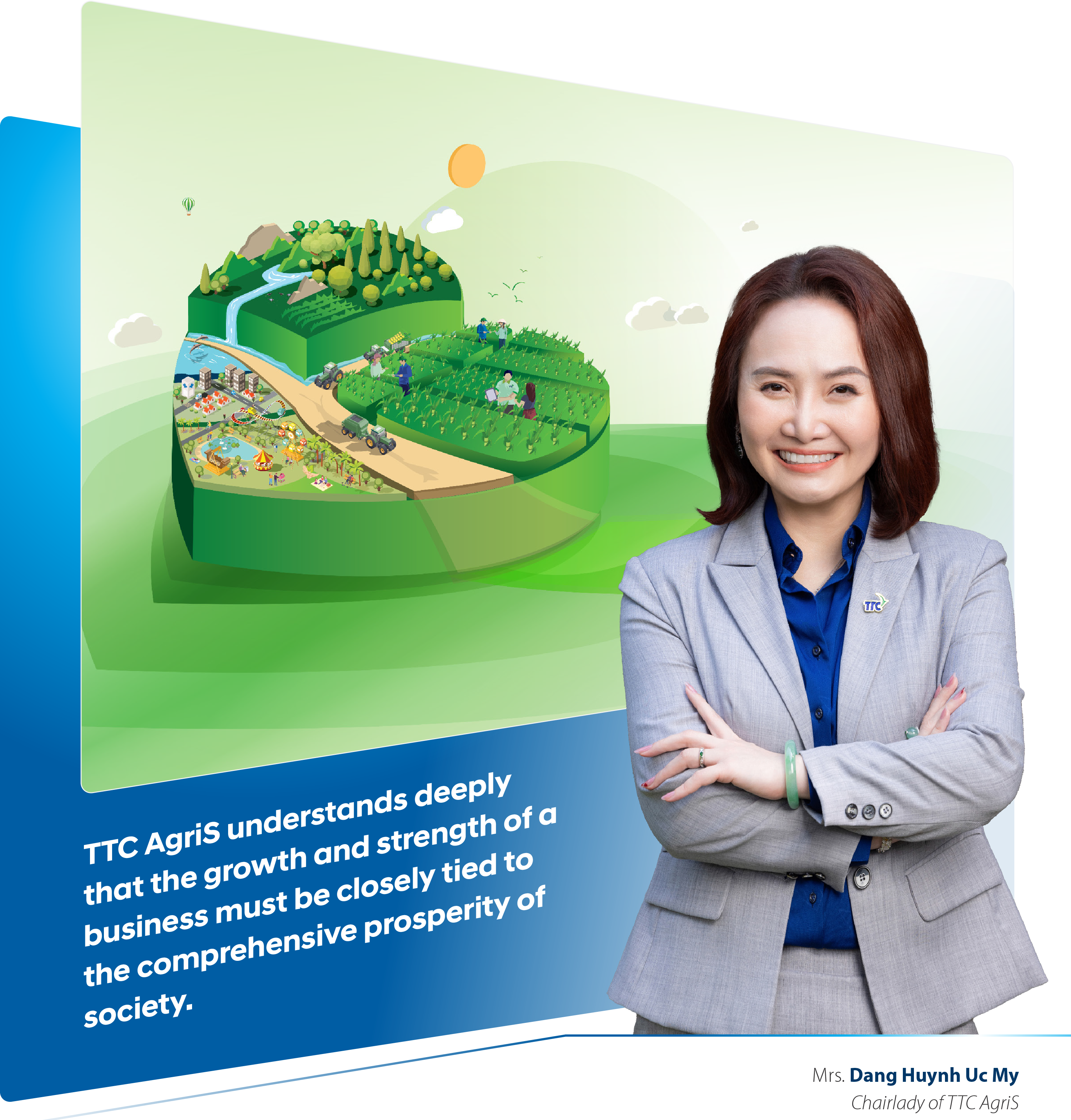
Maintaining a green business strategy to provide ecosystem- and environmentallyfriendly solutions, TTC AgriS committed to reaching Net Zero emissions across its entire value chain by 2035. This commitment reflected a strong dedication to sustainable development, inspiring positive change among like-minded organizations and businesses.
Valuing the obligation to contribute maximum value, TTC AgriS developed in tandem with:
- The livelihoods of farmers;
- The healthy lives of consumers;
- A circular economy for all Stakeholders.
During its journey of “Responsible Value Chain – 55 Years and Beyond,” TTC AgriS deeply embedded its spirit of responsibility and sharing through frequent and impactful activities. The Company actively supported communities through various eras and challenges, and partnered with the Government to address significant social and environmental issues with a strong sense of responsibility.
In FY 2023-2024, beyond enhancing the agricultural sector and ensuring global food security, TTC AgriS continued to implement frequent, impactful community support programs. Despite global economic fluctuations, the company’s CSR initiatives reached a total contribution of over 26 billion VND. This reflected TTC AgriS’s long-term commitment to advancing sustainable development within the community.

GRI 416-1: ASSESSMENT OF THE HEALTH AND SAFETY IMPACTS OF PRODUCT AND SERVICE CATEGORIES
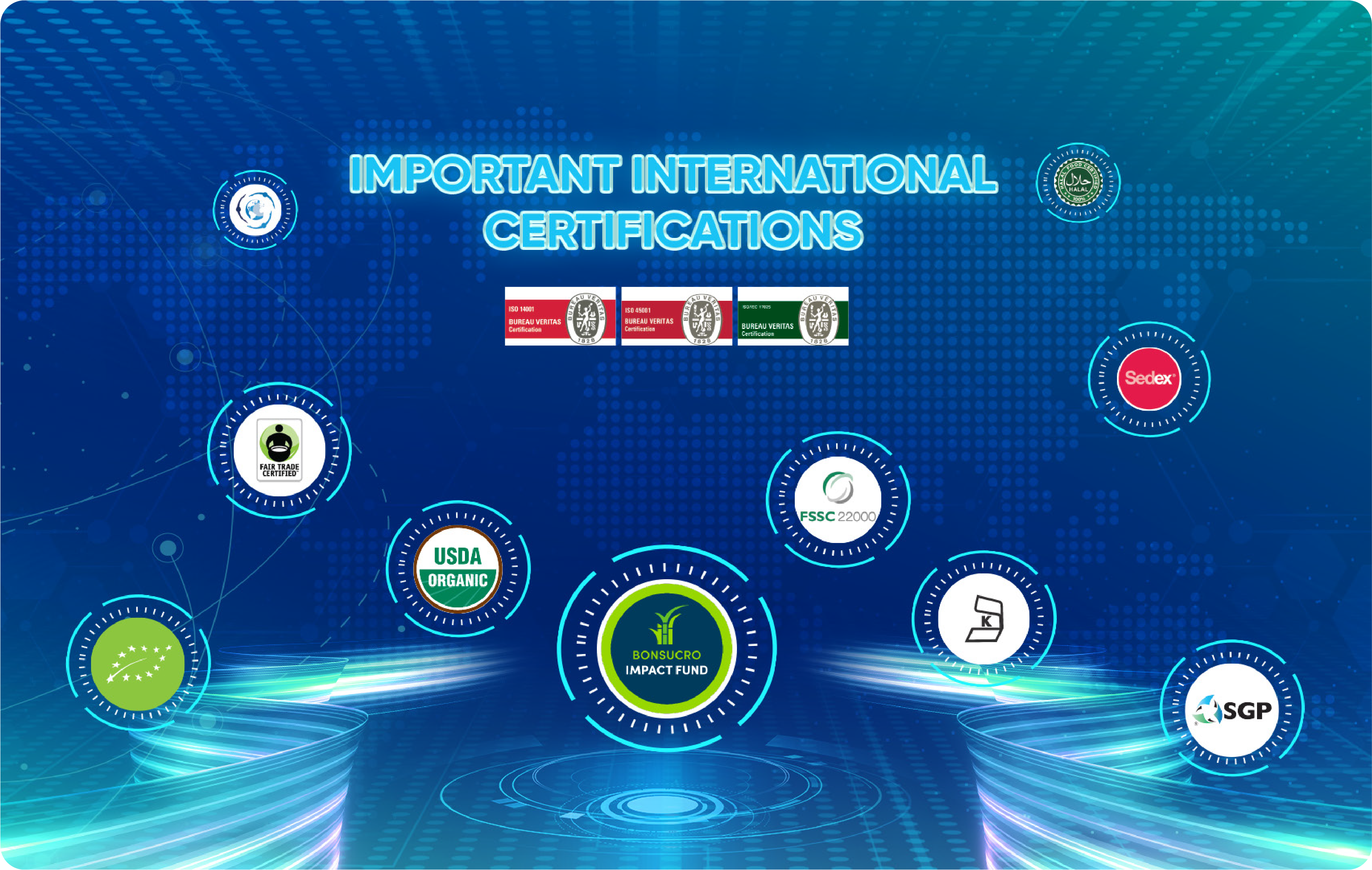
With a people-centered business philosophy, TTC AgriS prioritizes the health and safety of consumers in every decision. Therefore, each product is not only created to meet market demand but also undergoes rigorous testing to ensure compliance with safety and quality standards. This commitment is evidenced by the Company’s acquisition of numerous important international certifications related to product quality, such as:
- Food Safety Certification for the Middle East, issued by HCA;
- Kosher certification granted by KOF-K; FSSC 22000 version 5.1, ISO 9001:2015, and ISO 14001:2015 certifications issued by Bureau Veritas, BSI;
- Organic certification according to the standards of the US Department of Agriculture (USDA), EU, and China, Fair Choice and Fair Trade certification issued by Control Union;
- Notably, the TTCS factory and Tan Hung Farm of TTC AgriS became the first entities in Vietnam to achieve certification for fulfilling all production and sourcing standards set by Bonsucro.
With the mission of “Building advanced and sustainable agriculture that provides energy and nutrients of natural origin”, TTC AgriS is committed to providing consumers with premium, health-conscious products. To fulfill this mission, TTC AgriS utilizes cutting-edge production technologies to create clean sugar products that meet international standards. These products are made from sugarcane grown without chemical fertilizers or pesticides, ensuring they are rich in nutrients and minerals that benefit consumer health. In addition, TTC AgriS continues to expand its ecosystem of high-nutritional energy products that promote consumer well-being while delivering sustainable value to society.
GRI 416-2: INCIDENTS OF NON-COMPLIANCE CONCERNING THE HEALTH AND SAFETY OF PRODUCTS AND SERVICES
1. TTC AgriS’s quality assurance practices in FY 2023-2024
With the mission of building advanced and sustainable agriculture that provides energy and nutrients of natural origin to our Consumers, TTC AgriS has consistently prioritized quality in every production and business activity.
Every year, TTC AgriS undertakes numerous projects to improve technology, productivity, and product quality to reduce costs, maintain quality, and reduce the probability of spoiled, damaged, non-conforming products, aiming at our Zero Defect goal, all while maintaining environmentally friendly quality assurance systems that are closely tied to social and community responsibilities.
Quality control at TTC AgriS follows a standardized procedure, tailored with specific monitoring plans for each product line. This process ensures rigorous oversight from the selection of raw materials through production, storage, and final distribution to customers.
Closed-loop quality management system
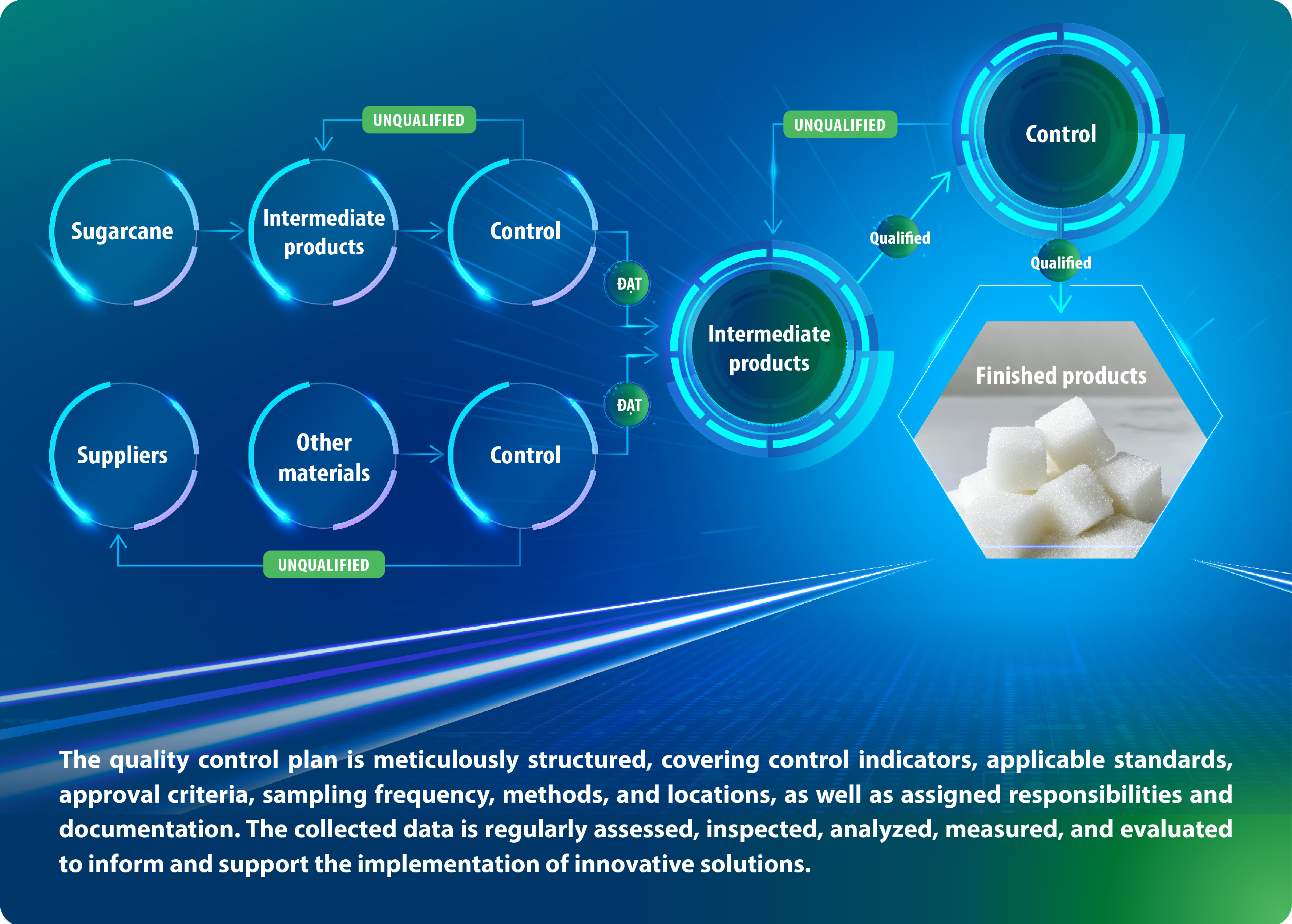
- Input materials are standardized, with strict acceptance procedures for each shipment.
- Regular reviews of existing suppliers and exploration of new ones are conducted to ensure a sufficient supply that adheres to food safety and hygiene standards.
- Storage and shipment are subjected to stringent monitoring procedures to mitigate risks related to food safety and hygiene.
- The Digifactory system has been developed to digitize all activities related to production management and quality control (QC) across all factories and products, including Sugar, Electricity, Water, and Fertilizers.
- The Warehouse Management System (WMS) is being implemented to enhance the effective control of shipments and deliveries to customers.
2. Providing food safety and hygiene training according to international standards
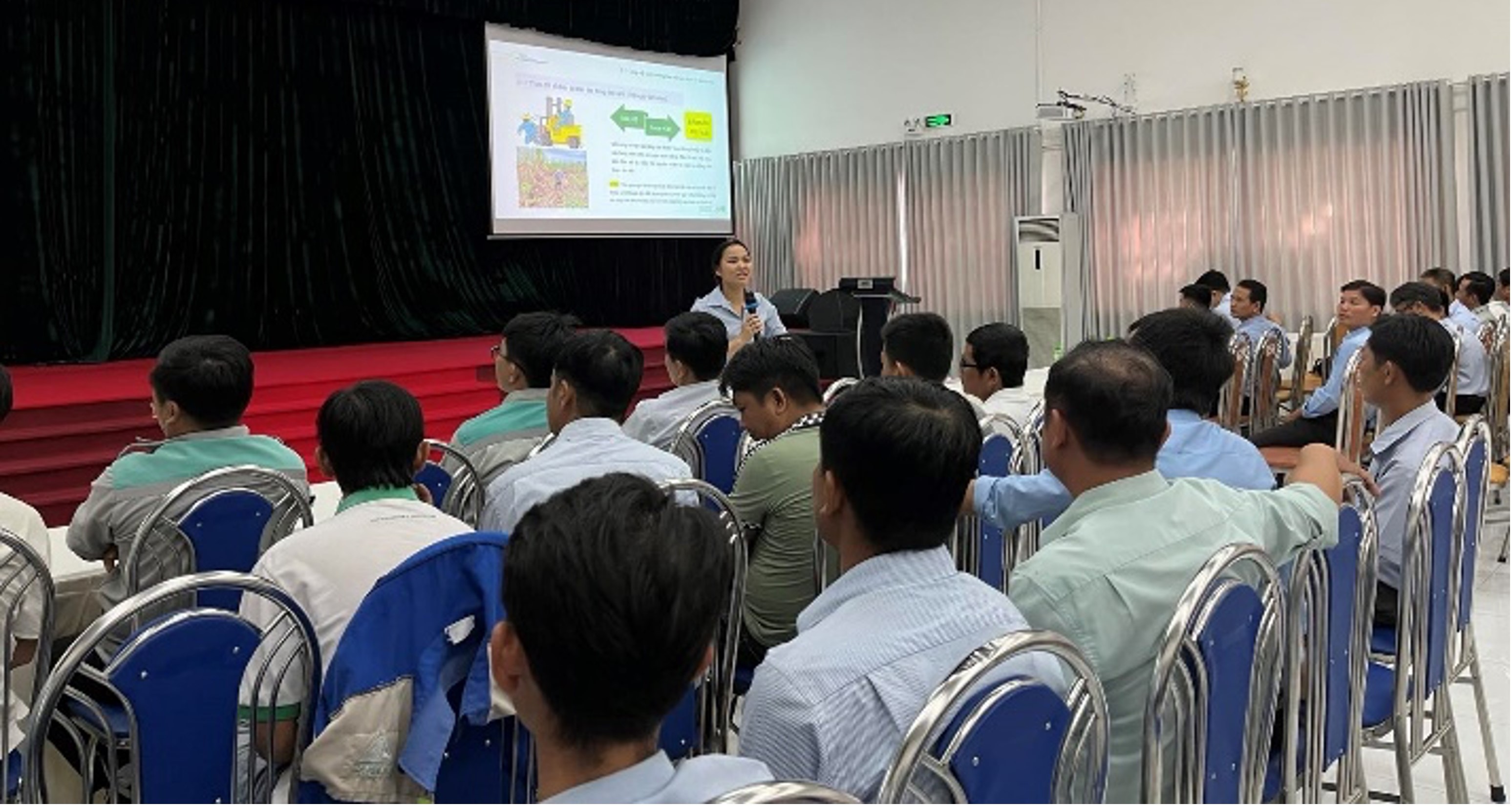
FY 2023-2034, TTC AgriS will continue organizing training sessions on Food Safety System Certification (FSSC) 22000 version 6.0 for over 100 staff members directly involved in production and quality control. These efforts aim to raise awareness of food safety and hygiene throughout TTC AgriS’s responsible value chain. FSSC 22000 version 6.0, introduced in April 2023, includes updates designed to enhance compliance requirements and support organizations in achieving the United Nations’ Sustainable Development Goals (SDGs). Annually, TTC AgriS also conducts training programs for Agribusiness Owners, focusing on environmental protection and human health during the growing and cultivation of sugarcane. These sessions emphasize transitioning to organic fertilizers as alternatives to chemical ones, and promoting the use of natural enemies instead of chemical protection agents to reduce GHG emissions.
3. Controlling non-conforming products
During FY 2023-2024, the Company rigorously implemented quality control from input materials to finished goods. This included monitoring and preservation of stored goods, adherence to goods receipt and shipment procedures, and ensuring carriers’ commitment to maintaining product integrity throughout the transportation process. Notably, the Digifactory system, which has been live and operational for the past two years, has enabled the complete digitization of the production and quality control (QC) processes, significantly reducing product defects. Simultaneously, the Warehouse Management System (WMS) is being implemented to manage the procedure of storage and shipment digitally, minimizing manual work and enhancing the overall efficiency of warehouse management.
TTC AgriS’s product quality assurance efforts in the past FY yielded numerous positive results, with consistently lower-than-target rates of non-conforming products. Specifically, the proportion of non-conforming products in production was 0.08%, 47% less than anticipated. The proportion of non-conforming products in storage and shipment was 0.1%, which was 23% less than the previous goal. The proportion of non-conforming products due to Customer complaints was 0.07%, which was 68% below the annual goal.
4. Streamlining the cost of quality
TTC AgriS maintains strict control over the cost of quality and has set an annual goal to reduce these expenses, contributing to enhanced operational efficiency and improved competitiveness. Cost of quality, or cost of fixing detects, encompasses all expenses associated with resolving issues and handling substandard shipments. Reducing this cost not only results in financial savings but also strengthens TTC AgriS’ market reputation and product quality. For FY 2023-2024, actual cost of quality was 58% lower than projected. Over the past 3 fiscal years, this figure has consistently been maintained at a low level, averaging 54% less than anticipated.
5. Timely responsiveness to customer requests, product quality, and delivery services
TTC AgriS conducts annual customer satisfaction surveys to assess responsiveness to customer requests, product quality, and delivery services. The collected data is thoroughly analyzed to identify customer needs, trends, and expectations. Based on these insights, the company develops appropriate solutions and adjustment plans for its product and service offerings, with the goal of maximizing customer satisfaction and fostering long-term loyalty to TTC AgriS products.
Survey results show that 90% of customers rated TTC AgriS’s responsiveness to their requests and product quality as Good or Excellent. Customer satisfaction with the delivery process reached 94%. Notably, TTC AgriS did not receive any negative feedback or dissatisfaction in any survey criteria. This promising result is a testament to TTC AgriS’s relentless efforts in quality improvement, adherence, and control from production to storage and delivery to Customers.
Furthermore, the Company has actively engaged in brand-specific fanpages. The Company frequently shares communications activities and updates information on sale prices and attractive promotional programs, all while gathering feedback from customers, capturing their interest and active support.
6. Product quality assurance action plan for FY 2024-2025
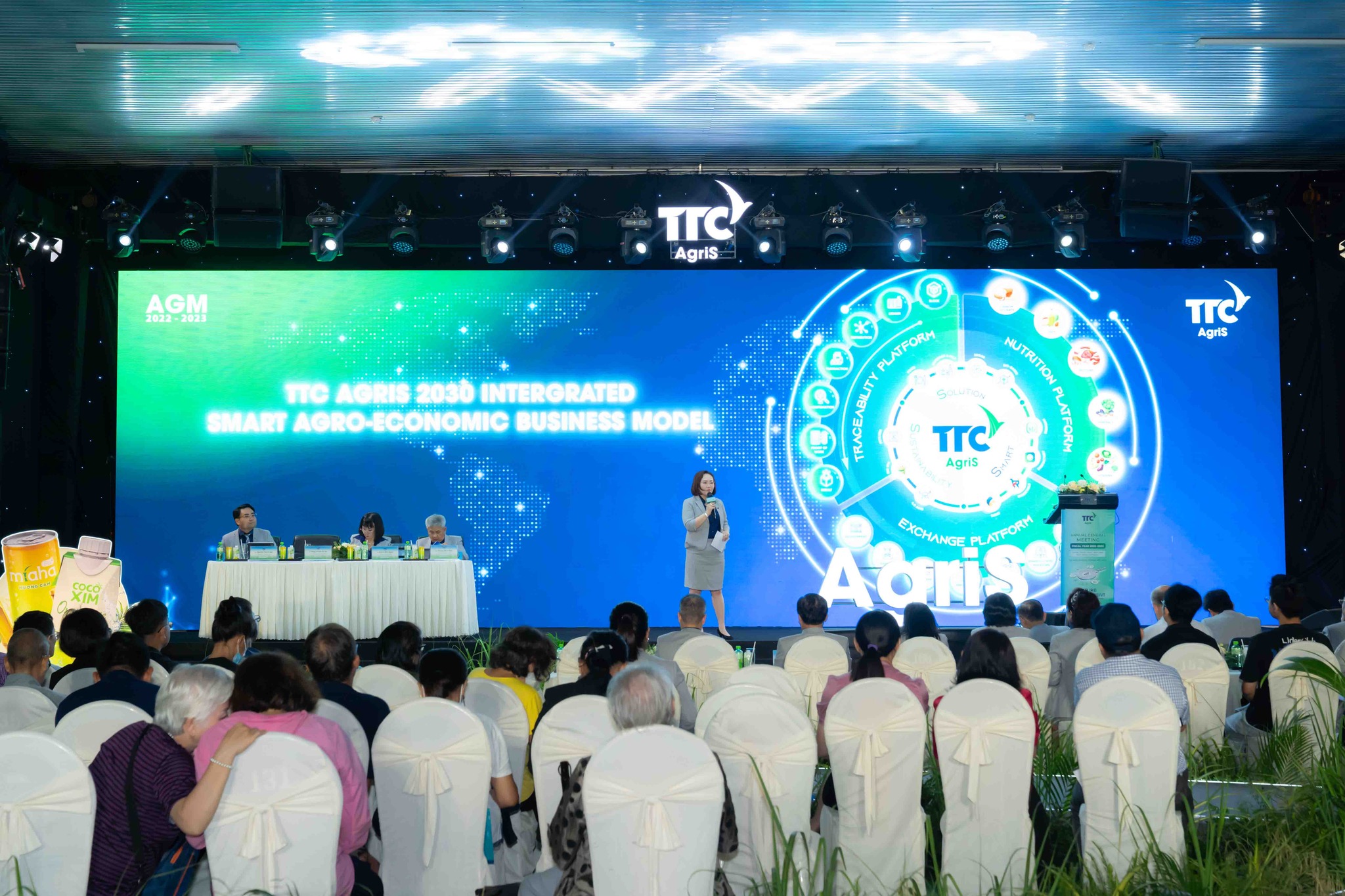
In FY 2024-2025, TTC AgriS plans to continue to enhance its quality assurance activities. The Company aims to promptly capitalize on market trends and diversify its products towards optimal quality to meet all customer demands. The BOM continues to review, evaluate, implement, and monitor the action plans in a systematic and coordinated manner. The specific activities include:
- Streamlining and coordinating production and business planning throughout the system;
- Conducting periodic reviews and audits to improve the machinery and equipment system, ensuring stability and enhancing product quality;
- Strengthening supplier management to optimize the entire process from raw material input to finished products;
- Implementing Food Safety and Hygiene control activities from input to output according to the requirements of FSSC 22000 Version 0.6;
- Communicating food safety and hygiene culture activities throughout the enterprise;
- Continuing to focus on the control of impurities by means of risk identification, formulation of proposals, and implementation of preventative and remedial measures;
- Analyzing market trends and consumer preferences to ensure the best response to customer needs;
- Adjusting the production process to reduce storage time;
- Strengthening R&D activities, diversifying products and packaging, bringing up to speed with market trends, and releasing products that cater to various customer needs;
- Enhancing transport services and adhering to preservation measures throughout the transportation process to ensure the highest level of product quality from the factory to the Customers;
- Enhancing services with a focus on customers to ensure customers understand the characteristics of each product and make the most suitable choice for their needs.